

Buying Bitcoin in Tehran isn't illegal, but doing it the "wild west" way is a fast track to having your assets frozen. For years, Iran's relationship with Cryptocurrency is a digital asset class that operates under complex international sanctions and domestic regulatory oversight in Iran was defined by gray markets and unlicensed miners straining the power grid. That era has ended. As of 2026, the landscape is strictly controlled, heavily taxed, and monitored by the state. If you are an investor, miner, or trader looking at the Iranian market, you need to understand that the rules changed drastically between early 2025 and mid-2026.
The core issue here isn't just about banning crypto; it's about control. The government wants the revenue, not the chaos. This guide breaks down exactly what is legal, what is restricted, and how the new tax laws affect your bottom line. We will look at the specific roles of the Central Bank, the licensing requirements for miners, and the practical steps ordinary citizens must take to stay compliant.
The Regulatory Shift: From Ban to Control
It helps to understand where we came from. In 2019, the Iranian government legalized mining to capture the economic value of those who were already doing it illegally. But legalization didn't mean freedom. It meant supervision. The turning point came in January 2025 when President Masoud Pezeshkian issued a directive establishing the Central Bank of Iran (CBI) is the sole regulatory authority responsible for overseeing the digital currency market, licensing participants, and managing rial transactions as the single gatekeeper for all crypto activities.
This wasn't a minor administrative change. It centralized power. Before this, various ministries had overlapping jurisdictions. Now, if you want to hold, trade, or mine crypto in Iran, the CBI says yes or no. They approved the 'Policy and Regulatory Framework for Cryptocurrencies' in early 2025, which effectively created a walled garden. You can play inside the walls, but you have to pay the toll. This framework requires all market participants-whether you are an individual saving for retirement or a company trading volume-to secure licenses. There is no more anonymous trading on unregulated offshore exchanges if you want to stay safe from enforcement actions.
Who Can Trade and What Are the Requirements?
For the average person in Iran, buying crypto is still possible, but it’s no longer as simple as signing up on a random website. The CBI has mandated that all transactions occur through approved channels. This means you likely need to use local exchanges that have secured their own licenses from the central bank. The most prominent player here is Nobitex is the dominant Iranian cryptocurrency exchange handling approximately 87% of domestic trading volume. By 2025, Nobitex maintained its market dominance even as overall volumes dipped slightly due to increased scrutiny.
Here is what you need to know to stay compliant as a trader:
- Licensing: Individuals and businesses must register with the CBI. While this sounds bureaucratic, it creates a paper trail that protects you from being accused of money laundering.
- AML/KYC Standards: Stringent Anti-Money Laundering (AML) and Know Your Customer (KYC) checks are now standard. Your identity is verified, and your source of funds may be questioned.
- Payment Gateways: Crypto platforms can obtain direct payment gateways within the regulatory framework, but brokers must conduct rial transactions transparently through designated accounts approved by the central bank. No more opaque cash deals.
If you are trying to move large sums, transparency is key. The CBI maintains direct and unrestricted access to all data, statistics, and records related to cryptocurrency activities per Executive Order 2025-01. This means the state knows exactly how much crypto you hold and where it went.
Mining Rules: Licenses, Power Costs, and Hardware
Mining in Iran is a high-stakes game. While legal, it is heavily regulated to protect the national power grid. The Ministry of Industry, Mine and Trade issues the actual mining licenses, but the Ministry of Energy sets the consumption limits. If you run a mining farm without a license, you aren't just breaking a rule; you're risking seizure of your hardware.
In August 2025, the government introduced a program encouraging citizens to report illegal mining activities. The results were significant: authorities dismantled approximately 100 unauthorized mining farms and seized more than 250,000 unauthorized devices. Experts estimate that around 95% of mining activities were operating illegally before these crackdowns intensified, highlighting the scale of the shadow economy.
If you are a legitimate miner, here are the non-negotiables:
- Obtain a License: You must get approval from the Ministry of Industry, Mine and Trade. As of mid-2025, over 1,000 licenses had been issued, so the process is established but competitive.
- Pay Export-Price Electricity: This is the big one. Legal miners do not get subsidized domestic rates. Instead, they pay electricity tariffs pegged to export prices. This significantly increases operational costs compared to the black market rates used by illegal miners.
- Sell to the State: Legal miners are required to sell their mined cryptocurrencies to the CBI through the National Iranian Money Changer Association (NIMA) system. Your earnings go into state revenue, not directly into your personal wallet unless you buy back from the NIMA pool.
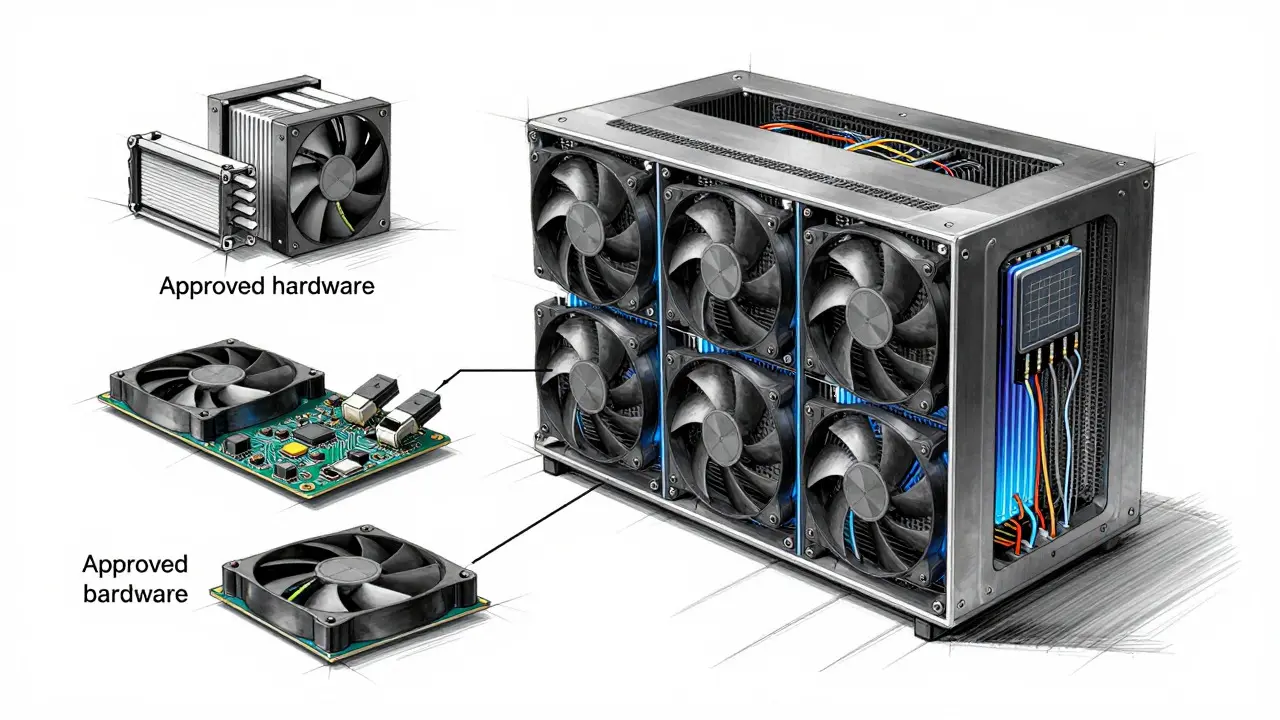
- Use Approved Hardware: You can only use government-approved hardware. This prevents the import of banned or inefficient machines that might drain the grid disproportionately.
Taxation: The New Capital Gains Tax
One of the most impactful changes in recent months is the introduction of taxes on profits. In August 2025, Iran enacted the Law on Taxation of Speculation and Profiteering. This marked the first time cryptocurrency trading was formally subject to capital gains tax in the country.
Previously, many traders assumed crypto profits were untaxed or hidden in the gray areas of the financial system. Now, digital assets are positioned alongside other speculative investments like gold, real estate, and forex. The implementation began in Q3 2025, giving traders a short window to adjust their strategies. Economic Affairs Minister Hemmati publicly supported this move, framing it as organizing the market rather than restricting it. However, he also criticized internet filtering policies, urging stakeholders to form a single platform to secure their interests.
What does this mean for your returns? If you bought Bitcoin in 2024 and sold it in 2026, that profit is taxable. You need to keep detailed records of your entry and exit points. The phased implementation suggests that compliance tools are still being refined, but the intent is clear: the state wants a cut of the upside. Ignoring this tax risk could lead to audits, especially since the CBI has full visibility into transaction data.
Market Dynamics and Sanctions Pressure
You can't talk about crypto in Iran without mentioning sanctions. International pressure continues to shape the domestic market. TRM Labs reported that total cryptocurrency flows in Iran reached approximately USD 3.7 billion between January and July 2025, representing an 11% decline from the same period in 2024. Why the drop? Increased regulatory scrutiny and external sanctions pressure.
A major event occurred in July 2025 when Tether froze addresses with Iranian exposure. This forced a coordinated push by domestic exchanges and influencers to help users offload USDT holdings. The solution was to swap into DAI via the Polygon network. This migration demonstrated the ecosystem's adaptability. Users moved to alternative stablecoins to preserve liquidity despite heightened sanctions. While this created temporary liquidity challenges, it showed that the market finds a way.
Despite the risks, illicit transactions at Iranian exchanges account for just 0.9% of total activity. Most everyday Iranians use digital assets as a hedge against inflation and financial instability, not for smuggling drones. The government recognizes this utility, which is why they are regulating rather than banning outright. They want to harness crypto for international trade settlements to reduce the impact of sanctions, including reported collaborations with Russia on a gold-backed stablecoin for cross-border payments.
Practical Steps for Staying Compliant in 2026
Navigating this environment requires diligence. Here is a checklist to keep your operations clean:
| Action Item | Responsible Authority | Status/Requirement |
|---|---|---|
| Register Trading Account | Central Bank of Iran (CBI) | Mandatory License |
| Apply for Mining Permit | Ministry of Industry, Mine and Trade | Required for all commercial mining |
| Verify Exchange Legitimacy | CBI Approved List | Use only licensed platforms (e.g., Nobitex) |
| Report Capital Gains | Ministry of Finance/Tax Office | Annual filing required since Aug 2025 |
| Monitor Stablecoin Exposure | User Responsibility | Diversify away from USDT if facing freeze risks |
Keep your records digital and backed up. Since the CBI has access to all records, any discrepancy between your personal books and the exchange data could trigger an audit. Also, be cautious with stablecoins. The shift from USDT to DAI in 2025 was a warning sign. Diversifying your stablecoin holdings across different networks (like Polygon or Ethereum) can mitigate the risk of a single issuer freezing your assets due to geopolitical shifts.
Frequently Asked Questions
Is it illegal to mine Bitcoin in Iran in 2026?
No, it is not illegal, provided you have a license from the Ministry of Industry, Mine and Trade. However, you must pay electricity rates pegged to export prices and sell your mined coins to the Central Bank through the NIMA system. Unlicensed mining is aggressively enforced against, with heavy seizures of hardware.
Do I need to pay taxes on my crypto profits?
Yes. Since August 2025, cryptocurrency trading is subject to capital gains tax under the Law on Taxation of Speculation and Profiteering. You should treat crypto gains similarly to gold or real estate profits and file accordingly with the Ministry of Finance.
Which exchanges are safe to use in Iran?
You should only use exchanges that are licensed by the Central Bank of Iran. Nobitex is the dominant player, handling the vast majority of domestic volume. Using unlicensed offshore exchanges carries higher risks of asset freezes and lack of legal recourse.
Why did many Iranians switch from USDT to DAI?
In July 2025, Tether froze several addresses with Iranian exposure due to sanctions pressure. To maintain liquidity, users and exchanges coordinated a mass migration to DAI, often using the Polygon network for lower fees and faster settlement.
Can foreign investors easily buy crypto in Iran?
It is difficult for foreigners to operate directly within the Iranian regulatory framework due to sanctions and banking restrictions. Most foreign interaction happens through international exchanges, but these carry higher compliance risks for both parties. Domestic participation is primarily reserved for Iranian residents and entities with proper CBI licensing.