
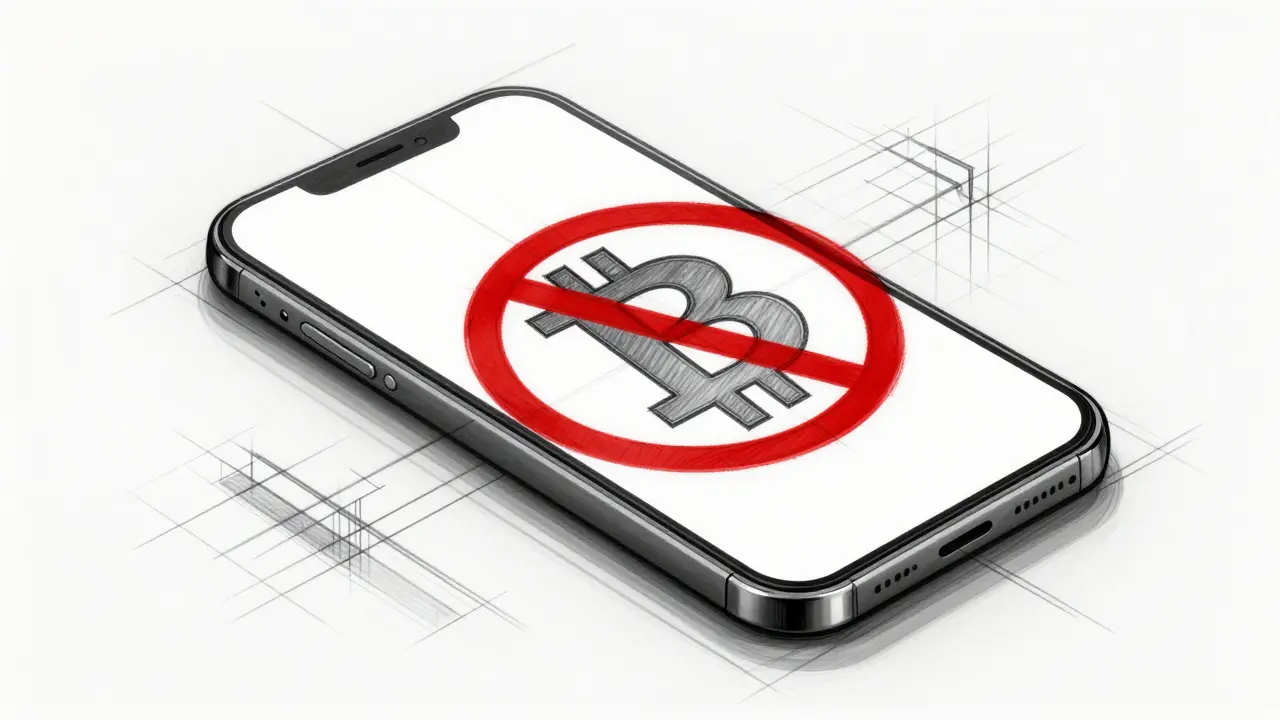
There is a common misconception that every country taxes cryptocurrency. You might assume that if you hold Bitcoin or Ethereum in China, the government simply wants its cut of your profits. But that assumption is dangerously wrong. In China, the concept of "crypto taxation" does not exist because the activity itself is criminalized.
If you are looking for a tax code section on capital gains for Bitcoin in mainland China, you will find nothing. That is because the People's Republic of China has implemented the world’s most comprehensive prohibition on digital assets. As of June 2025, holding, trading, or mining cryptocurrency is not just untaxed; it is illegal. This article breaks down exactly what this means for individuals, businesses, and expats living in or doing business with China.
The Core Problem: It Is Not a Tax Issue, It Is a Criminal One
To understand why there is no tax framework, you have to look at how the state classifies these assets. In the United States or Europe, cryptocurrencies are often treated as property or commodities. This classification triggers tax liabilities when you sell them for a profit. In China, however, the People's Bank of China (PBOC) classifies cryptocurrency transactions as "illegal financial activities."
This distinction changes everything. When an activity is deemed illegal, the government does not ask for a percentage of the proceeds; it confiscates the entire amount. Any financial gain derived from buying, selling, or mining crypto is considered illicit income. Under current Chinese law, these funds are subject to seizure by authorities without compensation. There is no form to fill out, no rate to calculate, and no legal way to declare these earnings.
The regulatory stance is rooted in a zero-tolerance policy. The state views decentralized currencies as a threat to financial stability and monetary sovereignty. By banning the asset class entirely, they eliminate the need for complex tax enforcement mechanisms. Instead of auditing wallets, they focus on shutting down exchanges and freezing bank accounts linked to crypto transfers.
Timeline of Restrictions: From Warning to Total Ban
The current total prohibition did not happen overnight. It was the result of a systematic tightening of controls over more than 16 years. Understanding this timeline helps explain why the enforcement is so severe today.
- June 2009: The initial warning. Authorities prohibited virtual currencies from being used to purchase real-world goods, signaling early skepticism.
- December 2013: Banking restrictions. Banks and payment institutions were banned from processing Bitcoin transactions, cutting off the primary on-ramp for users.
- April 2014: Trading closures. The PBOC ordered the closure of Bitcoin trading accounts, effectively halting domestic exchange operations.
- September 2017: ICO Ban. Initial Coin Offerings were declared illegal fundraising, forcing many crypto projects to flee the country.
- January 2018: Mining crackdown. Miners were forced to shift operations overseas due to energy concerns and regulatory pressure.
- June 2021: Mining ban. A nationwide shutdown of mining operations addressed environmental goals and speculative risks.
- September 2021: Comprehensive ban. All crypto trading, mining, and related services were explicitly outlawed.
- May 30, 2025: Ownership ban decree. The final nail in the coffin. A new regulation prohibited individual ownership of private cryptocurrencies, effective June 1, 2025.
This progression shows a deliberate strategy. Each step removed another layer of legality until only outright possession remained, which was then also targeted in mid-2025.
The 2025 Ownership Ban: What Changed?
For years, there was a gray area. While trading and mining were banned, merely holding Bitcoin in a personal wallet was not explicitly criminalized, though it offered no legal protection. Contracts involving crypto were void, but owning the coins wasn't prosecuted as a crime in itself.
That changed dramatically in May 2025. The comprehensive ownership ban decree, which took effect on June 1, 2025, closed this loophole. Now, private possession of cryptocurrencies like Bitcoin and Ethereum is prohibited. This makes China the first major economy to completely outlaw private cryptocurrency possession.
The implications are stark. If authorities discover you hold crypto assets, they can seize them under asset forfeiture laws. There is no appeal process based on "I was just holding it." The law treats the asset itself as contraband, similar to how other nations treat illegal substances or unlicensed weapons.
Enforcement Mechanisms and Penalties
How does the government enforce a ban on digital assets that exist on a global blockchain? They attack the fiat on-ramps and off-ramps. Since you cannot legally buy crypto with Chinese Yuan (CNY) through banks, any attempt to do so triggers anti-money laundering (AML) alerts.
Financial institutions in China are strictly forbidden from offering any cryptocurrency-related services. This includes account opening, trading, or settlement. If a bank detects a transaction linked to a known crypto exchange or a suspicious pattern typical of crypto trades, they will freeze the account. Users often report having their bank cards suspended indefinitely after attempting to transfer funds to offshore exchanges.
Penalties for violations range from administrative fines to criminal charges. Activities deemed as "illegal fundraising" or "financial fraud" can lead to imprisonment. For ordinary citizens, the risk is primarily financial ruin through frozen assets. For businesses, the risk includes heavy fines and the potential dissolution of the company.
Expats and Foreigners: No Exceptions
A common question among foreigners living in China is whether the ban applies to them. The answer is yes. The prohibition is universal. Whether you are a Chinese citizen, a permanent resident, or a tourist, the rules are the same.
You cannot trade crypto on Chinese platforms because there are none. You cannot use Chinese banks to move money to international exchanges. If you are caught engaging in crypto activities, you face the same penalties as locals. This creates significant challenges for expats who wish to manage their global crypto portfolios while residing in China. Many choose to maintain separate banking relationships outside of China to avoid triggering local monitoring systems, but even then, receiving funds into a Chinese bank account remains highly risky.
The Digital Yuan: The State's Alternative
While banning private cryptocurrencies, China has been aggressively promoting its own digital currency: the e-CNY or Digital Yuan. This is a Central Bank Digital Currency (CBDC), fundamentally different from Bitcoin.
The Digital Yuan is centralized, issued by the PBOC, and fully backed by the state. Unlike decentralized cryptocurrencies, the Digital Yuan offers complete transparency to the government. Every transaction is traceable, and the central bank retains control over the supply and flow of money. This aligns with China's goal of maintaining financial sovereignty and preventing capital flight.
The promotion of the Digital Yuan serves two purposes. First, it modernizes the payment infrastructure, making cashless transactions faster and cheaper. Second, it provides a state-sanctioned alternative to both cash and unauthorized digital assets. By encouraging the adoption of the e-CNY, the government reduces the demand for private cryptocurrencies, further justifying the ban.

Comparison: China vs. Global Standards
| Feature | China | United States | Taiwan |
|---|---|---|---|
| Legal Status | Illegal (Ownership Banned) | Legal (Property/Commodity) | Legal (Virtual Commodity) |
| Taxation | N/A (Assets Confiscated) | Capital Gains & Income Tax | 5% VAT on Trading Revenue |
| Banking Support | Prohibited | Allowed (with KYC/AML) | Allowed (with Regulations) |
| Mining | Banned | Legal (Varies by State) | Legal (Regulated) |
| Primary Goal | Financial Control & Stability | Consumer Protection & Revenue | Market Regulation & Revenue |
As the table shows, China stands alone among major economies. While neighbors like Taiwan implement value-added taxes (VAT) to regulate and generate revenue, China chooses exclusion. This approach eliminates tax compliance burdens for the state but imposes severe restrictions on individual financial freedom.
Future Outlook: Will the Ban Soften?
Regulations evolve, and some experts speculate that China’s stance might change. In July 2025, the Shanghai State-owned Assets Supervision and Administration Commission held a debate on digital assets. Agencies discussed strategic responses to stablecoins and the rapid evolution of the sector.
Some participants suggested that the strict position could soften. However, no concrete policy changes have been announced. Any future relaxation would likely be limited to specific, state-approved digital assets or institutional frameworks that maintain strict government oversight. The core philosophy-prioritizing financial stability and state control over decentralized innovation-remains unchanged.
For now, the ban holds. The success of the Digital Yuan and the continued suppression of private crypto markets suggest that the current regime is here to stay. Investors and residents must adapt to a landscape where traditional crypto taxation is irrelevant because the activity itself is forbidden.
Risks and Mitigations for Businesses
If your business operates in China, understanding these laws is critical. Even indirect exposure to crypto can pose risks. Here are key considerations:
- Vendor Payments: Do not accept cryptocurrency payments from customers in China. It violates anti-money laundering laws and exposes your business to criminal liability.
- Employee Compensation: Paying employees in crypto is illegal. All salaries must be processed through regulated banking channels in CNY.
- Cross-Border Transactions: Be cautious of suppliers or partners who request crypto payments. This may indicate illicit fund flows, and associating with such entities can trigger investigations.
- Data Privacy: Ensure your systems do not store or process data related to crypto transactions originating from Chinese IP addresses, as this could be construed as facilitating illegal activity.
Mitigation involves strict adherence to local financial regulations. Use only licensed payment processors and ensure all transactions are transparent and auditable within the Chinese legal framework.
Is it illegal to own Bitcoin in China in 2026?
Yes. As of June 1, 2025, the People's Bank of China implemented a comprehensive ban on the private ownership of cryptocurrencies. Holding Bitcoin or other digital tokens is considered an illegal activity, and assets can be confiscated by authorities.
Do I need to pay taxes on crypto gains if I live in China?
No, because you cannot legally earn or report those gains. Cryptocurrency transactions are classified as illegal financial activities. Any proceeds from such activities are considered illicit and are subject to confiscation rather than taxation.
Can foreigners trade crypto in China?
No. The ban applies universally to all individuals within China, regardless of nationality. Foreigners residing in or visiting China are subject to the same prohibitions on trading, mining, and owning cryptocurrency as Chinese citizens.
What happens if my bank account is linked to crypto?
Banks in China are required to monitor for suspicious transactions. If your account is linked to crypto exchanges or unusual patterns associated with digital asset trading, the bank may freeze your account and report you to authorities. This can lead to prolonged suspension of banking services and potential legal investigation.
Is the Digital Yuan the same as Bitcoin?
No. The Digital Yuan (e-CNY) is a Central Bank Digital Currency issued by the Chinese government. It is centralized, traceable, and fully regulated. Bitcoin is decentralized, anonymous, and unregulated. China promotes the Digital Yuan while banning Bitcoin and similar assets.