Living under strict financial sanctions makes buying and selling cryptocurrency feel like navigating a minefield. For the over 11 million people in Iran who rely on digital assets to bypass traditional banking restrictions, choosing the right exchange isn't just about getting the best price-it’s about keeping your funds safe from hacks and government freezes. The landscape shifted dramatically in 2025, with major security breaches and coordinated sanctions enforcement changing how users trade. If you are looking for reliable platforms that still accept Iranian residents in 2026, you need to understand which exchanges offer stability, low fees, and robust security against the backdrop of geopolitical tension.
The Shift in Iran's Crypto Landscape
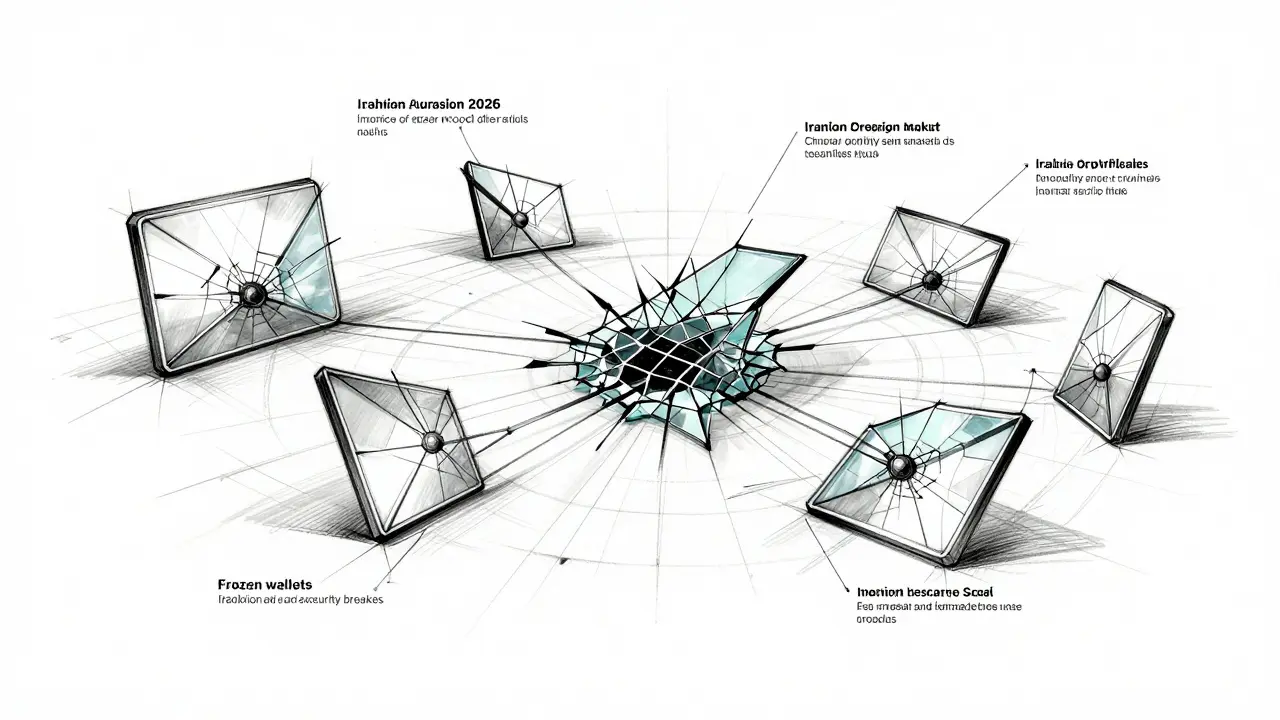
To understand where to trade today, we have to look at what happened recently. In July 2025, Tether executed its largest-ever freeze of Iranian-linked funds, targeting 42 specific cryptocurrency addresses. More than half of these frozen wallets had significant exposure to Nobitex, Iran's largest domestic cryptocurrency exchange handling over 87% of local transactions. This event wasn't an isolated incident; it was part of a broader crackdown that included a $90 million hack of Nobitex in June 2025. These events highlighted a critical vulnerability: relying solely on centralized domestic exchanges exposes users to both cyber threats and regulatory enforcement.
The response from the community was swift. Users were urged to offload USDT holdings and swap into DAI, a decentralized stablecoin pegged to the US dollar via the Polygon network. This shift demonstrated the agility of Iranian traders, moving toward faster, lower-cost networks while preserving access to liquid stablecoins. As we move through 2026, this trend continues. The lesson is clear: diversification between domestic convenience and international security is no longer optional-it is essential.
Top International Exchanges for Iranian Users
While domestic platforms dominate volume, international exchanges offer superior security infrastructure, broader asset selection, and often more competitive fees. Based on performance data from late 2025 and early 2026, several platforms stand out for their ability to serve users in sanctioned jurisdictions without immediate account closures.
| Exchange | Overall Rating | Min Deposit | Supported Coins | Spot Maker Fee | Key Feature |
|---|---|---|---|---|---|
| MEXC | 9.1 | $30 | 196+ | 0.2% | High liquidity & low fees |
| Bitsgap | 8.4 | No minimum | 673+ | Varies | Trading automation bots |
| XT.com | 8.3 | $10 | 1,010+ | 0.2% | Largest altcoin selection |
| LATOKEN | 8.0 | $1 | 475+ | 0.49% | Low entry barrier |
| CoinEx | 7.9 | $1 | 475+ | 0.49% | User-friendly interface |
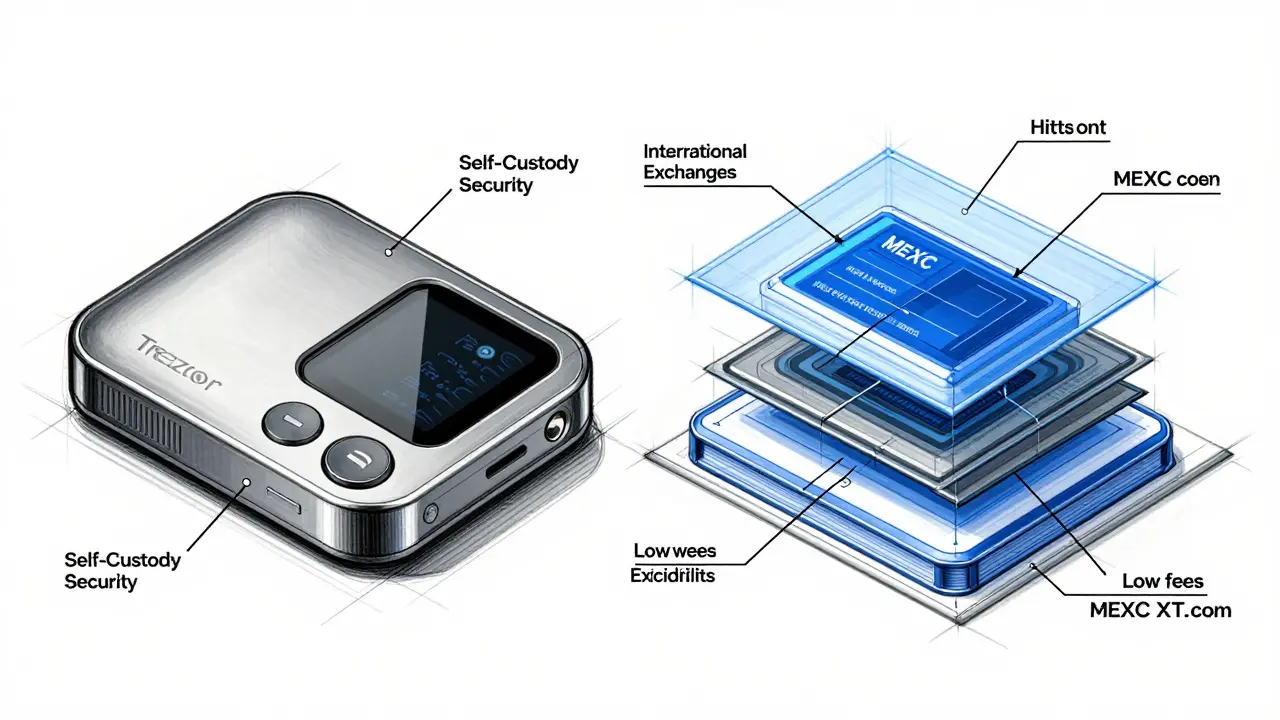
MEXC currently ranks highest for overall usability and fee structure. With a 0.2% spot maker fee, it is cost-effective for high-volume traders. However, the $30 minimum deposit might be a slight hurdle for casual users. Bitsgap operates differently as a trading automation platform. It connects to other exchanges, meaning its fees depend on the connected broker. This is ideal for users who want to run automated strategies without managing multiple accounts directly. XT.com offers the widest variety of cryptocurrencies, supporting over 1,000 coins, making it a go-to for those interested in low-cap altcoins.
Alternative rankings from CexFinder highlight KuCoin, a global exchange known for its wide range of altcoins and staking options as a strong contender with a 4.4/5 rating. KuCoin offers easy fiat deposits and a beginner-friendly interface, though users should be aware that its stance on Iranian users can fluctuate based on global compliance pressures. Always verify current terms before depositing large sums.
Navigating Domestic Platforms: The Nobitex Factor
You cannot discuss crypto in Iran without addressing Nobitex. Despite the $90 million hack in June 2025, it remains the primary venue for domestic trading due to its integration with local banking systems. For many Iranians, the ease of converting Rials to crypto is unmatched by international platforms. However, the risks are substantial. Blockchain intelligence firms have linked Nobitex to networks consistent with IRGC-aligned financial activity, making it a target for international sanctions.
If you choose to use Nobitex or similar domestic platforms like Bitpin or Wallex, treat them as short-term holding spots only. Do not store long-term savings there. Use them to buy crypto quickly, then immediately transfer your assets to a personal hardware wallet or a reputable international exchange. This "hot wallet" approach minimizes your exposure to both hacking risks and potential regulatory freezes.
Regulatory Changes and Tax Implications
In August 2025, the Iranian government enacted the Law on Taxation of Speculation and Profiteering. This marked a pivotal shift from tolerance to active regulation. For the first time, capital gains tax was imposed on cryptocurrency trading, placing it alongside gold, real estate, and forex. While implementation has been phased to allow market adaptation, users must now consider tax obligations when calculating profits.
This regulatory move signals Tehran's intent to formalize the crypto economy. For traders, this means keeping detailed records of all transactions, especially cross-border ones. Ignorance of the law is no longer a defense, and future audits may require proof of source of funds. Staying informed about updates from the Iranian Central Bank is crucial for compliance.
Security Best Practices for Sanctioned Jurisdictions
Operating in a sanctioned environment requires heightened security awareness. Here are practical steps to protect your assets:
- Diversify Stablecoins: After the Tether freezes, many users migrated to DAI on the Polygon network. Consider holding a portion of your stablecoins in non-USDT assets to mitigate counterparty risk.
- Use Hardware Wallets: Never leave large amounts on any exchange. Devices like Ledger or Trezor give you full control over your private keys, removing third-party risk entirely.
- Enable Two-Factor Authentication (2FA): Use authenticator apps rather than SMS-based verification, which can be intercepted or compromised.
- Verify KYC Requirements: International exchanges may request additional documentation for users from sanctioned countries. Be prepared to provide proof of identity and residence, but avoid sharing unnecessary financial details.
- Monitor Network Activity: Stay updated on blockchain analysis reports. If a specific address or exchange is flagged by entities like Chainalysis or CipherTrace, adjust your strategy accordingly.
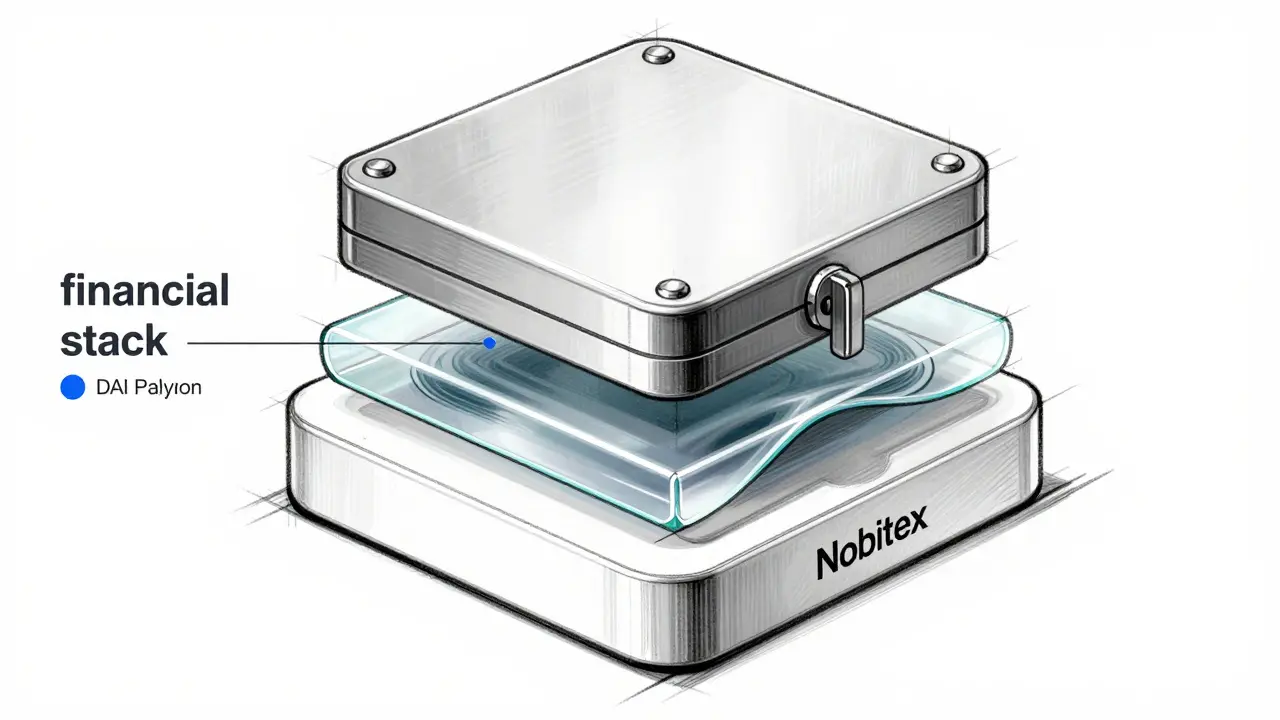
The goal is to maintain liquidity while minimizing exposure to centralized points of failure. By combining the accessibility of domestic platforms with the security of international ones and self-custody solutions, you create a resilient financial stack.
Future Outlook: Adaptation and Resilience
The Iranian crypto ecosystem is proving to be remarkably adaptable. Despite declining volumes in 2025 due to enforcement actions, adoption continues to grow as traditional banking channels remain restricted. The shift toward decentralized finance (DeFi) protocols and alternative stablecoins like DAI suggests a maturing market that prioritizes sovereignty and security.
As we look ahead, expect increased scrutiny from international regulators and potentially more sophisticated sanctions enforcement. However, the borderless nature of cryptocurrency ensures that opportunities will persist. The key to success lies in staying informed, diversifying your tools, and always prioritizing security over convenience.
Can I use Binance if I live in Iran?
Binance does not officially support users from Iran due to international sanctions. Attempting to use the platform may result in account suspension and loss of funds. It is safer to use exchanges like MEXC, XT.com, or KuCoin, which have historically been more lenient or unclear regarding Iranian residency, though you should always verify current terms of service.
Is it safe to keep my crypto on Nobitex?
No, it is not recommended for long-term storage. Nobitex suffered a $90 million hack in June 2025 and is subject to international sanctions. Use it for quick conversions between Rials and crypto, then transfer your assets to a personal hardware wallet or a reputable international exchange for better security.
Why did Tether freeze Iranian wallets in 2025?
Tether froze 42 addresses linked to Iran to comply with international sanctions regulations. Many of these wallets had transactional flows connecting to Nobitex and other entities associated with sanctioned activities. This action was part of a broader effort by stablecoin issuers to adhere to global financial laws.
What is the best stablecoin to use in Iran now?
Following the Tether freezes, many Iranian users have shifted to DAI, particularly on the Polygon network. DAI is a decentralized stablecoin that is less susceptible to single-entity censorship compared to USDT. It offers lower transaction fees and greater privacy for cross-border transfers.
Do I need to pay taxes on crypto profits in Iran?
Yes, since August 2025, Iran has implemented a capital gains tax on cryptocurrency trading under the Law on Taxation of Speculation and Profiteering. You are required to report profits and pay applicable taxes, similar to how gold and real estate investments are taxed. Keep detailed records of your transactions for compliance.
Which exchange has the lowest fees for Iranian users?
MEXC and XT.com both offer spot maker fees of 0.2%, which are among the lowest in the industry. Bitsgap also offers competitive pricing depending on the connected exchange. For beginners, CoinEx and LATOKEN have slightly higher fees at 0.49% but offer very low minimum deposits starting at $1.