
It is June 2026, and the landscape for trading cryptocurrency in India looks nothing like it did just a few years ago. If you are holding digital assets or planning to trade, you cannot ignore the massive regulatory shift that has occurred. The days of unregulated, wild-west style exchanges operating without oversight are effectively over. Today, every platform you use must answer to the Financial Intelligence Unit of India (FIU-IND) under the Prevention of Money Laundering Act (PMLA). This isn't just paperwork; it is a strict banking-level compliance regime that dictates how your money moves, how your data is stored, and whether your exchange stays open.
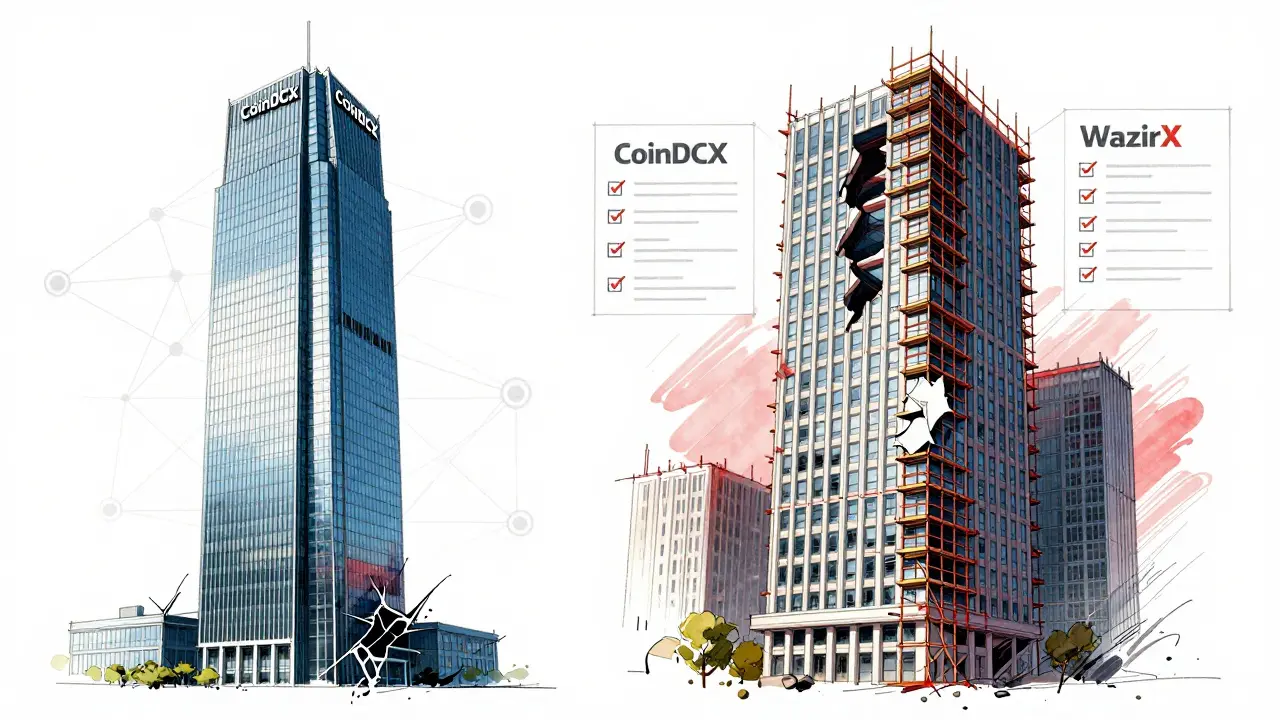
The two biggest names in this conversation are CoinDCX, which holds the title of India's first digital asset unicorn, and WazirX, one of the country's pioneering platforms. Both have faced severe scrutiny, massive hacks, and heavy fines. Understanding their current status and the rules they must follow is critical for any Indian trader who wants to keep their funds safe and their account active.
The Regulatory Framework: What Changed in 2023 and 2025?
To understand where things stand today, we have to look at the timeline. In March 2023, the government brought Virtual Digital Asset (VDA) service providers under the PMLA. This meant crypto exchanges had to register with the FIU-IND. They were no longer tech startups; they were treated like banks for anti-money laundering (AML) purposes. This required rigorous Know Your Customer (KYC) checks and continuous reporting of suspicious transactions.
Then came the seismic shift in September 2025. The FIU-IND introduced a mandatory requirement for cybersecurity audits. These aren't optional self-checks. Exchanges must hire firms approved by CERT-In (the Indian Computer Emergency Response Team) to conduct third-party security assessments. This rule was a direct response to the growing number of hacks and aimed to make cybersecurity a core investment rather than an afterthought. For smaller exchanges, this created immense financial pressure. For giants like CoinDCX and WazirX, it became a matter of survival.
WazirX: From Pioneer to Cautionary Tale
WazirX was once the go-to exchange for many Indians. However, its reputation took a devastating hit in 2024 when it suffered a catastrophic security breach. Hackers stole approximately $230 million worth of cryptocurrencies. This wasn't a minor glitch; it exposed deep vulnerabilities in the sector's infrastructure.
The aftermath was messy. Users watched anxiously as WazirX struggled to recover. Many compared its slow response time unfavorably to international exchanges like BingX, which managed to resume operations within 24 hours after a similar breach. The delay eroded trust. While WazirX has worked to comply with new FIU regulations, the shadow of the $230 million loss remains. It serves as a stark reminder that even established platforms can fail if their security protocols aren't bulletproof. For traders, this incident highlighted the importance of diversifying holdings and not keeping all eggs in one basket, regardless of the brand name.
CoinDCX: The Unicorn Under Pressure
If WazirX was the cautionary tale of 2024, CoinDCX faced its own crisis in July 2025. As India's first digital asset unicorn, CoinDCX was seen as the more stable, professional option. Yet, it too experienced a major security breach. This event reinforced regulators' concerns that cybersecurity preparedness was lacking across the board, even among well-funded domestic players.
CoinDCX has since doubled down on compliance. Being larger and better capitalized, it has been able to absorb the costs of the mandatory CERT-In audits more easily than smaller competitors. It continues to operate as a registered entity with the FIU-IND, maintaining its position as a key player in the market. However, the breach forced users to re-evaluate their trust in "domestic safety." Just because an exchange is Indian-owned doesn't mean it is immune to global cyber threats.
The Crackdown on Offshore Exchanges
You might be thinking, "Why stick to Indian exchanges? I can use Binance or KuCoin." That door is closing fast. The regulatory crackdown extends beyond domestic players. Indian authorities have issued notices to 25 offshore cryptocurrency exchanges, including Huione, CEX.IO, and BingX. The allegations include money laundering risks and failure to comply with domestic registration requirements.
Here is the reality: these offshore platforms face potential bans if they do not provide adequate explanations within a 45-day notice period. Major international players like Coinbase have successfully registered with India's FIU. Binance registered after paying a $2.2 million penalty, and KuCoin followed suit after a $41,000 fine. But those that refuse to play by the rules risk being cut off from the Indian banking system entirely. This means you could lose access to your funds or be unable to deposit INR, leaving you stranded.
| Exchange | Origin | FIU-IND Registered? | Recent Security Incidents | User Risk Level |
|---|---|---|---|---|
| CoinDCX | India | Yes | Breach in July 2025 | Moderate (Regulatory compliant but past hack) |
| WazirX | India | Yes | $230M Hack in 2024 | High (Trust issues due to slow recovery) |
| Coinbase | USA | Yes | None reported recently | Low (Strong global compliance) |
| Binance | Global | Yes (After $2.2M fine) | Various global incidents | Moderate (Compliant but complex history) |
| Huione / CEX.IO | Offshore | No / Pending | N/A | Very High (Risk of ban/service cutoff) |
The FATF Travel Rule: No More Anonymity
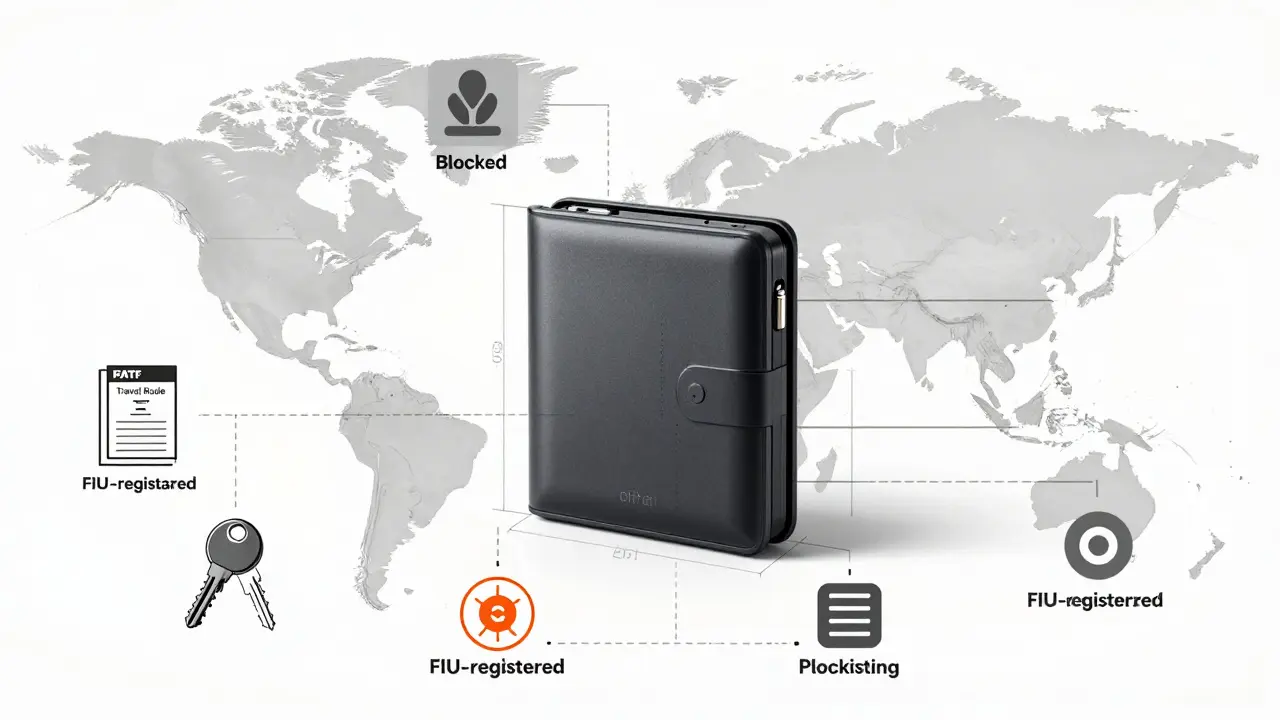
One of the most significant changes for everyday users is the implementation of the Financial Action Task Force (FATF) Travel Rule. India has adopted this with no minimum threshold. What does this mean for you? Every time you send cryptocurrency, detailed sender and receiver information must be attached to the transaction. There is no anonymity. If you transfer Bitcoin to another wallet, the exchange must share your identity details with the receiving exchange.
This represents one of the strictest compliance regimes globally. It is designed to stop illicit finance, but it also means your financial privacy is significantly reduced. You need to ensure that both the sending and receiving exchanges are fully compliant. If you try to move funds between a regulated Indian exchange and an unregistered offshore wallet, the transaction may be blocked or flagged for investigation.
How to Protect Yourself in 2026
Given the volatile regulatory environment and the history of hacks, here is how you should approach trading in India right now:
- Stick to FIU-Registered Platforms: Only use exchanges that are explicitly registered with the FIU-IND. Check the official FIU website for the current list. Using unregistered offshore platforms carries the risk of sudden service termination.
- Diversify Your Holdings: Do not keep all your assets on one exchange. Split them between two reputable, compliant platforms (e.g., CoinDCX and Coinbase). If one faces technical issues or regulatory hurdles, you still have access to your other funds.
- Use Cold Storage for Long-Term Holds: Exchanges, even compliant ones, are targets for hackers. For assets you plan to hold for months or years, move them to a hardware wallet or a secure cold storage solution. Services like Liminal Custody offer compliant institutional-grade custody, but individual users should consider personal hardware wallets.
- Monitor Regulatory News: The rules are still evolving. Keep an eye on announcements from the Finance Ministry and FIU-IND. Changes in tax laws or compliance requirements can happen quickly.
- Verify Audit Reports: Since September 2025, exchanges must undergo CERT-In-approved cybersecurity audits. Look for public statements or reports from your exchange regarding these audits. Transparency is a good sign.
The Future: Consolidation and Compliance
The outcome of the current enforcement actions against offshore exchanges will likely lead to market consolidation. We may see fewer options, but hopefully, safer ones. Smaller Indian exchanges that cannot afford the high cost of compliance may shut down or merge with larger players. This benefits the ecosystem by raising the overall standard of security and reliability.
Finance Minister Nirmala Sitharaman has previously emphasized a balanced approach, warning against rushed regulations that hinder innovation. However, the government's current actions show a clear priority: investor protection and financial system integrity come before convenience. If an exchange ignores regulations, it will not be permitted to operate with impunity.
For the average user, this means a slightly more cumbersome process for signing up and transferring funds, but a significantly safer environment. The era of easy, anonymous crypto trading in India is over. The future belongs to compliant, transparent, and secure platforms that prioritize the safety of user assets above all else.
Is it legal to trade cryptocurrency on CoinDCX and WazirX in 2026?
Yes, it is legal provided that both exchanges are registered with the Financial Intelligence Unit of India (FIU-IND) under the Prevention of Money Laundering Act (PMLA). Both CoinDCX and WazirX have taken steps to comply with these regulations. However, legality does not guarantee immunity from security breaches, so users should still exercise caution and diversify their holdings.
What happened to WazirX after the 2024 hack?
WazirX suffered a $230 million security breach in 2024. While the platform continued to operate, the incident severely damaged user trust due to the slow recovery process compared to international standards. In 2026, WazirX operates under stricter cybersecurity audit mandates imposed by the FIU-IND, but users remain cautious about keeping large amounts of funds on the platform.
Can I still use offshore exchanges like Binance or KuCoin in India?
Major international exchanges like Binance and KuCoin have registered with the FIU-IND after paying penalties, making them legally accessible. However, many other offshore exchanges (like Huione and CEX.IO) have received notices and face potential bans if they do not comply within 45 days. Using non-compliant offshore platforms carries a high risk of losing access to your funds.
What is the FATF Travel Rule and how does it affect me?
The FATF Travel Rule requires exchanges to share sender and receiver information for all cryptocurrency transfers, with no minimum threshold. This means there is no anonymity in crypto transactions in India. Every transfer is tracked, and your identity is linked to your wallet movements. This is designed to prevent money laundering but reduces financial privacy.
Are Indian crypto exchanges safe from hacks?
No exchange is completely immune to hacks. Both WazirX (2024) and CoinDCX (July 2025) have suffered significant breaches. However, the new regulatory framework requiring mandatory cybersecurity audits by CERT-In-approved firms aims to improve security standards. To maximize safety, users should enable two-factor authentication, use strong passwords, and store long-term holdings in cold storage wallets rather than on exchanges.