
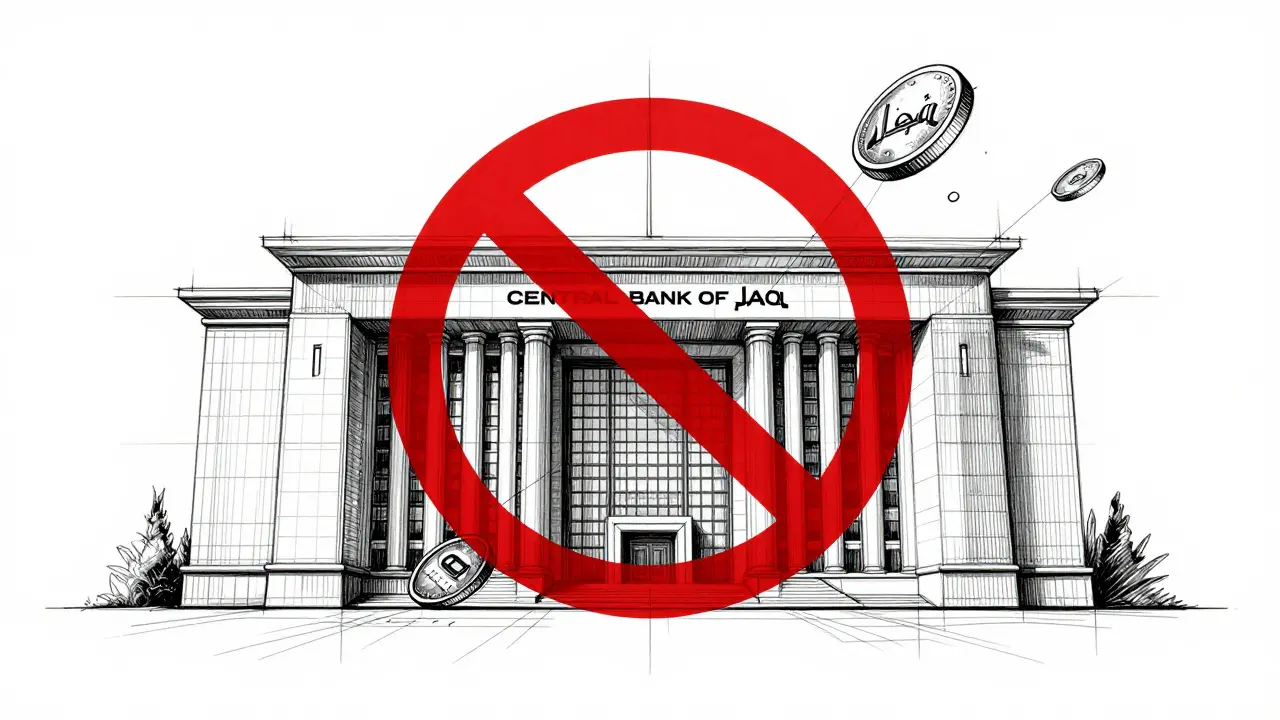
Living in a country where the government bans cryptocurrency but is simultaneously building its own digital version sounds like a paradox. Yet, this is exactly the reality for residents and businesses in Iraq as of mid-2026. The Central Bank of Iraq (CBI) is the primary monetary authority responsible for regulating financial institutions and issuing the national currency, the Iraqi dinar has maintained one of the strictest anti-crypto stances in the world. While private cryptocurrencies like Bitcoin are effectively outlawed for formal use, the state is quietly pushing forward with plans for a government-controlled digital currency.
If you are trying to navigate the financial landscape in Iraq, understanding these restrictions is not just about following rules-it’s about protecting your assets and avoiding legal trouble. The situation is complex because it involves international pressure, local religious rulings, and deep-seated economic instability. Here is what you need to know about how the CBI handles digital assets, why they banned them, and what their new digital currency project means for everyday people.
The Legal Wall: How the CBI Banned Crypto
The prohibition didn’t happen overnight. It started back in 2017 when the CBI first signaled that banks could not touch digital currencies. But the real hammer came later. The cornerstone of the current ban is CBI Circular No. (125/5/9) is a regulatory directive issued on November 22, 2021, explicitly prohibiting all supervised financial institutions from conducting transactions involving virtual assets or cryptocurrencies. This circular made it clear: no bank, no payment provider, and no financial intermediary can process anything related to crypto.
Why did they go so hard? The CBI cited three main fears:
- Financial Crime: Fear that anonymous transactions would fuel money laundering and terrorist financing.
- Market Volatility: Concerns that the wild price swings of assets like Bitcoin would hurt ordinary savers.
- Consumer Protection: A lack of recourse for users who lose money in scams or hacks.
In March 2022, the CBI tightened the screws further with a new directive aligned with Financial Action Task Force (FATF) Recommendations are international standards set by a global policy-making body aimed at combating money laundering and terrorist financing, which require countries to regulate virtual asset service providers. This meant that Iraqi banks had to implement "enhanced due diligence"-basically, extra checks and balances-to ensure no crypto money was slipping through the cracks. Using credit cards or e-wallets for speculative crypto trading became strictly prohibited.
The Religious Factor: Fatwas and Public Trust
In Iraq, finance isn't just regulated by laws; it's also influenced by religious guidance. This adds a unique layer to the crypto ban. In 2018, the Supreme Fatwa Authority of the Kurdistan Regional Government (KRG) is a religious judicial body in northern Iraq that issues binding Islamic legal rulings, including those affecting economic activities and financial instruments issued a ruling against OneCoin is a fraudulent cryptocurrency scheme launched in 2014 that collapsed after being exposed as a massive Ponzi scam, leading to significant losses for investors worldwide. Although OneCoin was a specific scam, this ruling sent a powerful message to the public: many religious leaders view unregulated digital tokens as haram (forbidden) or highly risky.
This cultural backdrop makes enforcement easier in some ways. When both the bank and the mosque say "stay away," compliance rates among the general population tend to be higher. However, it also means that even if the government eventually loosens regulations, gaining public trust will take time.
The Paradox: Banning Crypto While Building a CBDC
Here is where things get interesting. While the CBI shuts the door on Bitcoin and Ethereum, it is kicking down the door for its own version of digital money. In March 2025, Mazhar Mohammed Saleh, a financial advisor to the Iraqi Prime Minister, announced that the Central Bank is moving toward issuing a Central Bank Digital Currency (CBDC) is a digital form of fiat currency issued and backed by a nation's central bank, designed to offer the efficiency of digital payments while maintaining state control over monetary policy.
Saleh outlined several reasons for this shift:
- Reducing Cash Leakage: Less physical cash means fewer opportunities for corruption and black-market hoarding.
- Cost Savings: Printing paper money is expensive. Digital currency cuts those costs.
- Financial Control: The government wants better visibility into spending trends and financial flows.
- Anti-Money Laundering: A state-controlled ledger makes it harder to hide illicit funds compared to anonymous crypto.
Essentially, Iraq wants the technology behind blockchain without the decentralization. They want the speed and efficiency, but they refuse to give up control. This puts Iraq in a strange position: banning private innovation while racing to build state-run infrastructure.
Economic Context: Why Liquidity Matters
You can't understand Iraq's crypto stance without looking at the economy. Iraq faces severe liquidity constraints. As of recent analyses, deposited funds account for only 8.8% of the total issued money supply. That means most of the dinars printed by the government are sitting outside the banking system-in safes, under mattresses, or in informal markets.
The monthly budgetary needs of the government range between 18 and 20 trillion dinars. Meeting this demand is a constant struggle. This scarcity led to the painful devaluation of the Iraqi Dinar (IQD) is the official currency of Iraq, which underwent a significant devaluation in 2020 from approximately 1,182 to 1,450 dinars per US dollar, causing inflation and public unrest in 2020. The exchange rate moved from 1,182 IQD per USD to 1,450 IQD per USD. Food prices surged, and public discontent grew.
In this environment, citizens look for alternatives to preserve value. Cryptocurrency becomes an attractive option for those worried about the dinar losing more value. But the government sees this capital flight as a threat to its monetary sovereignty. Hence, the ban is partly about keeping money inside the traditional banking loop, even if that loop is leaking badly.
The Reality on the Ground: Enforcement Gaps
On paper, the ban is absolute. In practice, it’s messy. There is a significant gap between policy and enforcement. The CBI can easily stop a major bank from processing a Bitcoin transaction. But stopping an individual from using a peer-to-peer app or trading on a decentralized exchange is much harder.
Informal trading networks persist across Iraq. People still buy and sell crypto, often using cash or informal hawala systems to move value. The risk for individuals is ambiguous. While possessing crypto isn't explicitly criminalized in a way that leads to automatic arrest, engaging in it can expose you to Anti-Money Laundering (AML) investigations. If authorities suspect your crypto activity is linked to illicit funds, they have the tools to freeze your assets.
This creates a gray area. Banks are terrified of breaking the rules, so they block any suspicious activity. Individuals operate in the shadows. This asymmetry highlights a broader issue: the CBI lacks the technological infrastructure to monitor every single transaction in the informal sector. They can control the pipes (banks), but they can't fully control the water (people).
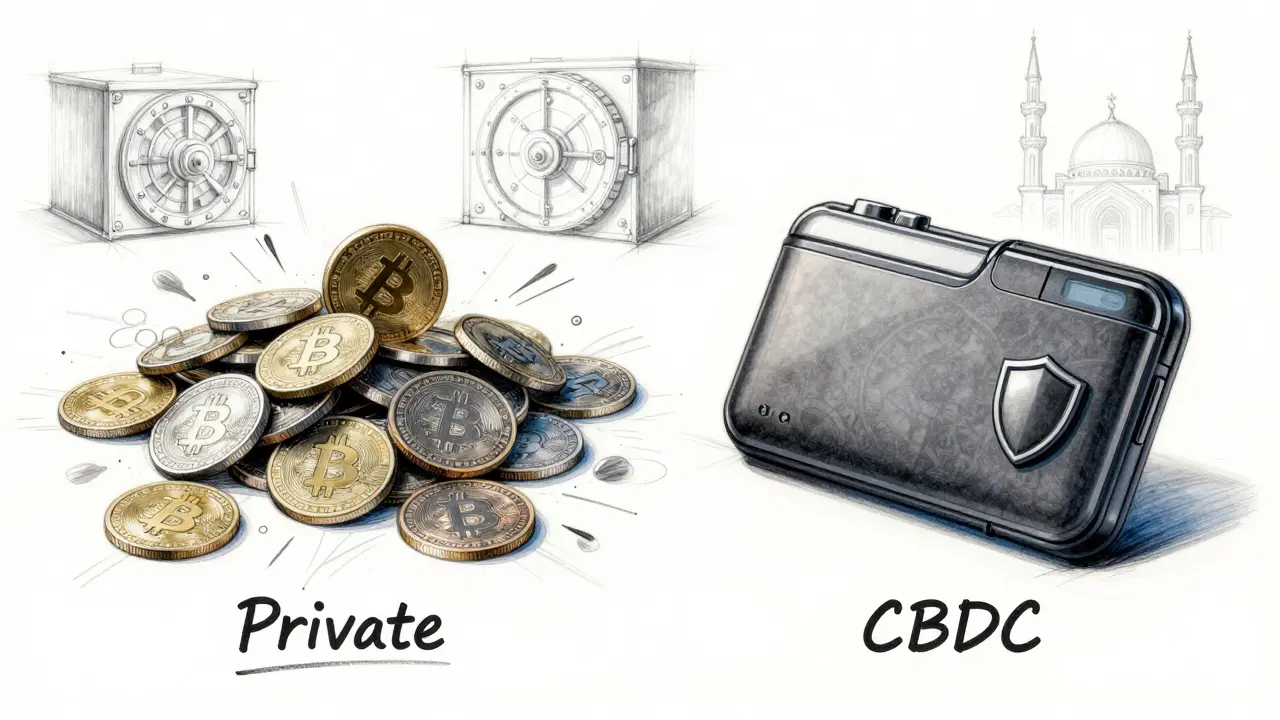
| Feature | Private Cryptocurrencies (Bitcoin, etc.) | Planned Iraqi CBDC |
|---|---|---|
| Legal Status | Prohibited / No legal tender status | Future legal tender (State-backed) |
| Control | Decentralized (No single owner) | Centralized (Central Bank of Iraq) |
| Anonymity | Pseudonymous (Harder to trace) | Fully Identified (Linked to user identity) |
| Risk Profile | High volatility, scam risks | Low volatility, surveillance risks |
| Bank Interaction | Banks cannot process transactions | Banks will likely distribute/manage wallets |

Human Rights and Surveillance Concerns
The push for a CBDC isn't just about economics; it's about power. Human rights organizations have raised alarms. The Human Rights Foundation's CBDC Tracker is a monitoring tool that evaluates countries' CBDC projects based on criteria such as political rights, civil liberties, and financial freedom, rating Iraq as an 'Electoral Autocracy' with low scores rates Iraq poorly on political rights and civil liberties. Critics argue that a state-controlled digital currency could expand government surveillance capabilities dramatically.
If every transaction is recorded on a government database, the state can see exactly where you spend your money, when, and with whom. In a country where commentary on controversial topics can lead to arrest or salary docking, this level of financial transparency is concerning. Legal analysts warn that Iraq risks creating a "legal vacuum" where private crypto is neither legitimized nor effectively deterred, while the state prepares a tool for enhanced control.
What Should You Do?
If you live in Iraq or do business there, here is the bottom line:
- Avoid Formal Channels: Never try to use your Iraqi bank account or local debit card to buy crypto. It will be blocked, and you may face account freezes.
- Understand the Risk: Informal trading exists, but it carries AML risks. If you engage in P2P trades, keep records and avoid large, suspicious sums.
- Watch the CBDC Rollout: The government is actively researching its digital dinar. Once launched, it will likely become the primary way to handle digital payments legally. Stay informed on official announcements from the CBI.
- Respect the Ban: Despite the gray areas, the official stance is zero tolerance for institutions. Don't advise clients or friends to use crypto through formal banking channels.
The landscape is shifting. The ban on private crypto is firm, but the interest in digital finance is growing. The coming years will show whether Iraq can balance its desire for control with the public's need for efficient, modern financial tools.
Is it illegal to own Bitcoin in Iraq?
Owning Bitcoin is not explicitly criminalized for individuals in a way that leads to automatic imprisonment, but it is heavily restricted. Financial institutions are banned from facilitating any transactions involving Bitcoin. This means you cannot buy it through banks or official payment processors. Engaging in crypto trades can expose you to Anti-Money Laundering (AML) investigations if authorities suspect illicit activity.
Why did the Central Bank of Iraq ban cryptocurrency?
The CBI banned cryptocurrency primarily to prevent money laundering, terrorist financing, and consumer loss due to market volatility. They also aim to maintain control over the national currency and prevent capital flight, especially given the historical instability of the Iraqi dinar.
What is the Iraqi CBDC and when will it launch?
The Iraqi CBDC is a state-controlled digital version of the Iraqi dinar. As of 2025, it is in the research and development phase. The government aims to use it to reduce cash leakage, lower printing costs, and increase financial surveillance. A specific launch date has not been publicly confirmed, but progress is ongoing.
Can I use my Iraqi bank card to buy crypto?
No. CBI directives explicitly prohibit banks and payment service providers from using payment cards, e-wallets, or other financial instruments for speculative trading or cryptocurrency transactions. Attempting to do so will likely result in the transaction being declined and potentially flagged for review.
How does Iraq's crypto ban compare to China's?
Both countries have strict bans, but Iraq's approach is more comprehensive regarding institutional access. While China has seen significant underground crypto activity despite bans, Iraq's formal financial system has virtually no measurable legitimate crypto activity. Iraq also combines its financial ban with religious fatwas, adding a cultural dimension to the restriction.