
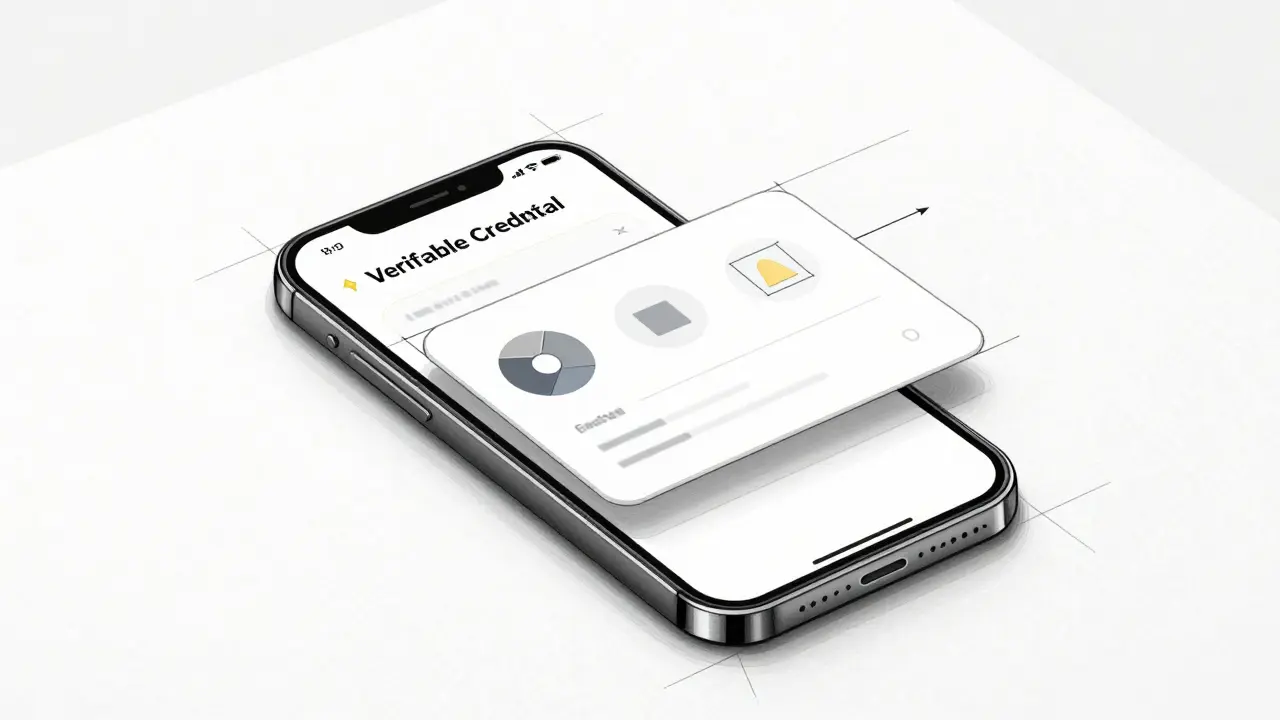
Imagine proving you are over 18 without handing over your birth certificate. Or verifying your medical history for a new doctor without filling out endless paper forms. This is the promise of blockchain-based identity verification, which uses distributed ledger technology to create secure, user-controlled digital identities. In 2026, this isn't just sci-fi anymore. It’s becoming the backbone of how we handle personal data online.
Traditional identity systems are broken. They rely on centralized databases that sit like ducks’ eggs for hackers. When those servers get breached, millions of passwords, social security numbers, and photos leak into the dark web. You can’t change your Social Security number easily, but you can revoke a compromised cryptographic key. That shift in control is what makes blockchain identity so powerful.
The Core Problem with Centralized Identity
Right now, your identity lives in silos. Your bank has one record of you. Your government has another. Your employer has a third. To prove who you are, you constantly repeat yourself, uploading the same passport photo or driver’s license to every new service you sign up for. This creates two major problems:
- Data fragmentation: No single source of truth means inconsistencies and errors pile up.
- Security risks: Centralized servers are single points of failure. If one company gets hacked, your data is exposed across multiple contexts.
Blockchain solves this by decentralizing trust. Instead of trusting a corporation to keep your data safe, you trust the mathematical integrity of the network. As Dr. Gavin Wood, co-founder of Ethereum, noted, decentralized identity returns control of personal data to individuals. You hold the keys-literally.
How Blockchain Identity Actually Works
You might think blockchain stores your entire resume or medical records. It doesn’t. That would be inefficient and violate privacy laws like GDPR. Instead, it uses a clever combination of three technologies:
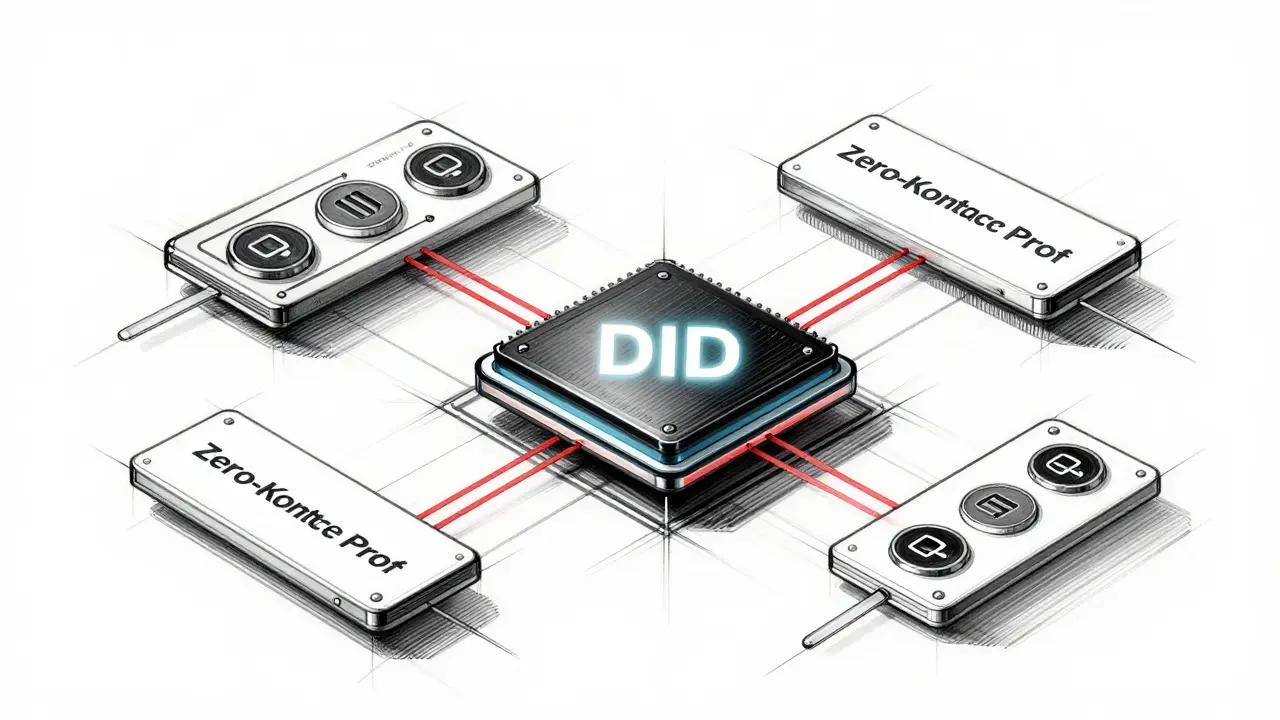
- Decentralized Identifiers (DIDs): These are unique, persistent strings of code that identify you on the blockchain. Unlike an email address tied to a provider, a DID belongs only to you.
- Verifiable Credentials (VCs): Think of these as digital diplomas or licenses issued by trusted authorities (like a university or government). They are cryptographically signed so anyone can verify they’re real without calling the issuer.
- Digital Wallets: Apps on your phone where you store your DIDs and VCs. You decide who sees what and when.
Here’s a practical example. Say you want to rent a car. Traditionally, you hand over your physical driver’s license. The rental agent copies it, scans it, and stores it in their database. With blockchain identity, you open your wallet, select your driver’s license credential, and share a zero-knowledge proof. The system verifies you are licensed and over 21 without revealing your name, address, or other details. The transaction is recorded on the blockchain as immutable, but your private data stays private.
Key Components of the Architecture
To build a robust identity system, developers rely on specific technical layers. Understanding these helps clarify why this approach is more secure than traditional methods.
| Feature | Centralized Database | Blockchain Identity |
|---|---|---|
| Data Storage | Central server (single point of failure) | Distributed nodes (resilient) |
| User Control | Organization controls access | User controls access via private keys |
| Verification Speed | Minutes to days (manual checks) | Seconds (automated smart contracts) |
| Privacy Model | All-or-nothing data sharing | Selective disclosure (zero-knowledge proofs) |
| Immutability | Records can be altered or deleted | Transactions are permanent and auditable |
Notice the speed difference. IBM reports that blockchain verification can occur in seconds, compared to manual processes that drag on for days. This efficiency comes from smart contracts, which automatically execute verification rules when conditions are met. No middleman needed.
Real-World Use Cases in 2026
By 2026, blockchain identity has moved beyond pilots into production. Here’s where it’s making the biggest impact:
Financial Services
Banks use it for Know Your Customer (KYC) compliance. Instead of re-verifying customers every time they open a new account, banks can request a verified credential from the user’s wallet. This reduces onboarding time from weeks to minutes and cuts fraud significantly. Financial services account for 42% of all blockchain identity implementations, according to recent industry surveys.
Healthcare
Patient data is notoriously fragmented. A blockchain-based system allows patients to carry their medical history securely. Doctors can access critical information during emergencies without waiting for records to be faxed between hospitals. Dock.io reported reducing patient onboarding time from 45 minutes to under five minutes in early trials.
Government Services
Estonia was an early adopter, using blockchain for citizen identity since 2017. By 2026, many countries are following suit. Governments issue digital IDs that citizens use to vote, file taxes, or access public services. The EU’s eIDAS 2.0 framework explicitly supports blockchain-based solutions, setting a standard for interoperability across borders.
Professional Credentials
Universities and professional bodies issue verifiable degrees and certifications. Employers can instantly verify qualifications without contacting HR departments. This is particularly useful for freelancers and gig workers who need to prove skills quickly to potential clients.
Challenges and Limitations
It’s not all smooth sailing. Blockchain identity faces several hurdles that prevent universal adoption:
- Key Management: If you lose your private key, you lose access to your identity. There’s no “forgot password” button on the blockchain. Recovery mechanisms exist but add complexity.
- Regulatory Uncertainty: Laws vary wildly by region. While the EU embraces it, other jurisdictions remain cautious. GDPR’s “right to be forgotten” clashes with blockchain’s immutability, requiring creative legal workarounds.
- Integration Complexity: Legacy systems don’t talk to blockchains easily. Enterprises spend 8-12 weeks integrating these solutions, with significant training required for IT staff.
- User Experience: Managing cryptographic keys is intimidating for non-tech users. Interfaces must simplify this process without compromising security.
A Deloitte survey found that 63% of enterprises cited GDPR compliance as a major hurdle. Another PreciseHire study revealed that 28% of users struggled with key management complexity. These aren’t deal-breakers, but they require careful design and education.
The Future: AI and Cross-Chain Portability
Looking ahead, two trends will shape blockchain identity:
AI-Enhanced Fraud Detection: Companies like 1Kosmos are integrating artificial intelligence to detect anomalous behavior in identity transactions. AI can spot patterns that suggest synthetic identities or deepfake attacks, adding another layer of security.
Cross-Chain Interoperability: Currently, different blockchains operate in silos. New protocols aim to allow identities to move seamlessly between networks. Imagine using your Ethereum-based ID to log into a Solana-based DeFi app. This portability is crucial for widespread adoption.
Forrester predicts that by 2027, blockchain-based identity will handle 30% of digital identity transactions in developed economies. We’re already seeing convergence with decentralized finance (DeFi), where 78% of providers plan integrations by 2025.
Getting Started: A Practical Guide
If you’re curious about trying blockchain identity, here’s how to begin:
- Choose a Wallet: Download a reputable digital wallet app that supports W3C Verifiable Credentials. Options include Trust Wallet, MetaMask (with identity plugins), or specialized apps like Civic.
- Obtain Credentials: Look for issuers offering verifiable credentials. Some universities and professional organizations already issue them. Start small with a degree or certification.
- Test Verification: Try using your credential with a participating verifier. Many job platforms and financial institutions are beginning to accept them.
- Secure Your Keys: Use hardware wallets or biometric backups to protect your private keys. Never share your seed phrase with anyone.
Remember, the goal is convenience and control. You shouldn’t have to become a cryptography expert to benefit from this technology. Good interfaces abstract away the complexity while keeping you in charge.
Is blockchain identity verification secure?
Yes, it is highly secure. Blockchain uses cryptographic hashing and digital signatures to ensure data integrity. Unlike centralized databases, there is no single point of failure. However, security depends on proper key management-if you lose your private key, recovery can be difficult.
Can I delete my data from the blockchain?
No, blockchain is immutable. Once data is written, it cannot be erased. However, most systems store only hashed references or metadata on-chain, keeping sensitive personal data off-chain in secure storage. This approach helps comply with privacy regulations like GDPR.
What happens if I lose my private key?
Losing your private key means losing access to your identity. Most modern wallets offer multi-signature setups or social recovery options, where trusted contacts can help restore access. Always back up your seed phrase securely and consider using hardware wallets for extra protection.
How does blockchain identity compare to traditional ID cards?
Traditional IDs are static and easily forged. Blockchain identities are dynamic, cryptographically secured, and allow selective disclosure. You can prove specific attributes (like age) without revealing unnecessary information. Verification is also faster and more reliable.
Are blockchain identity solutions expensive to implement?
Initial setup costs can be high due to integration complexity and training needs. However, long-term savings come from reduced fraud, faster verification times, and lower administrative overhead. For large organizations, the ROI becomes positive within 1-2 years.