
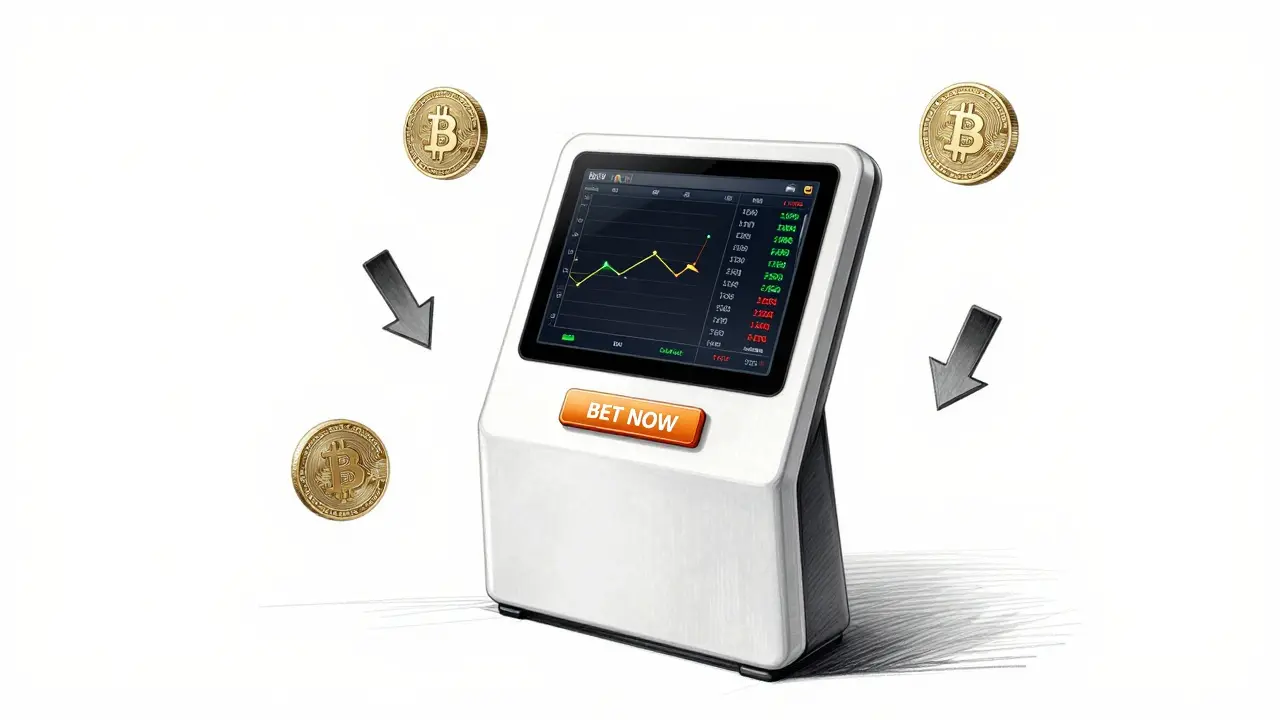
There’s a lot of noise in the crypto world about platforms that promise big returns with little effort. One of them is Bispex. But here’s the thing: Bispex isn’t a crypto exchange at all. It’s a prediction market platform. And if you’re looking to buy Bitcoin, trade Ethereum, or swap altcoins like you would on Binance or Coinbase, you’ve got the wrong platform.
Bispex lets users bet on whether the price of a cryptocurrency will go up or down within a set time frame. Think of it like sports betting, but instead of predicting who wins the game, you’re predicting if Bitcoin hits $70,000 by Friday. The platform’s native token, BISP, is used to place bets and claim winnings. It’s listed on Bitget, but that doesn’t mean Bitget endorses it - it just means you can trade BISP there.
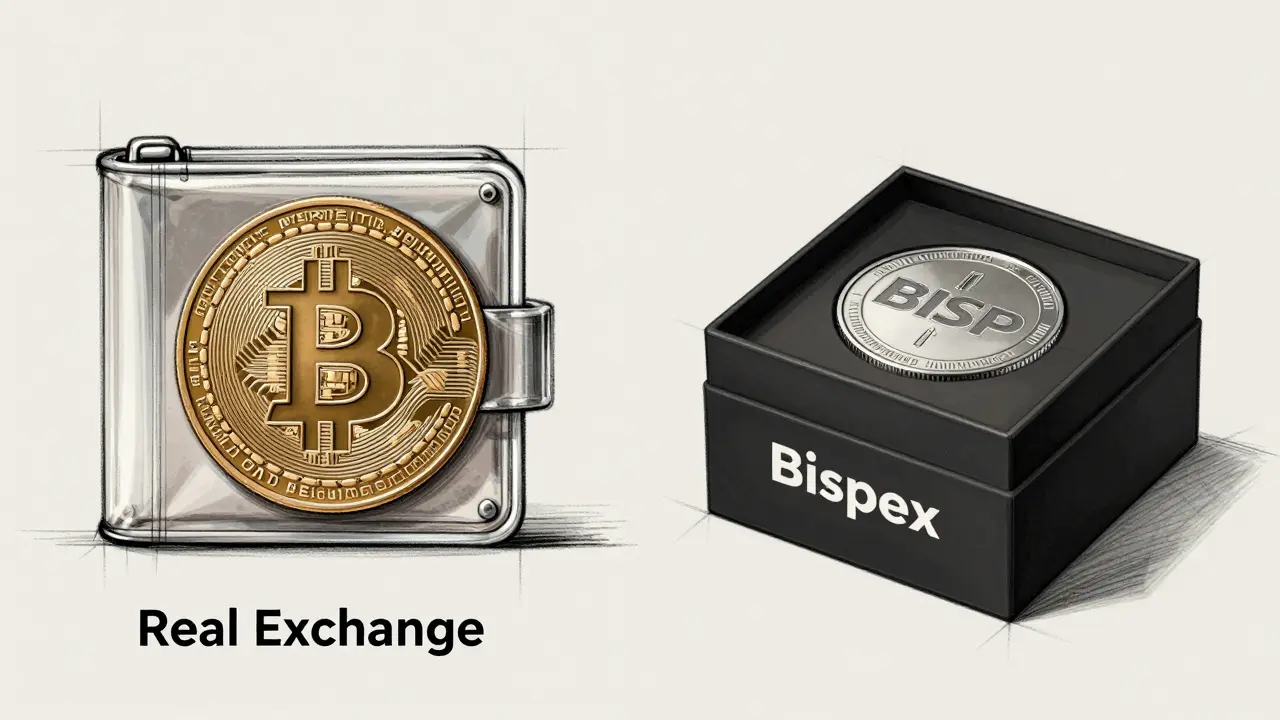
How Bispex Works (And Why It’s Not a Real Exchange)
On a real crypto exchange, you own the coins you buy. You store them in your wallet. You send them. You trade them. Bispex doesn’t let you do any of that. You don’t own Bitcoin on Bispex. You don’t own Ethereum. You own a bet. That’s it.
Here’s how it works: You pick a cryptocurrency - say, Solana. You choose a price target - like $150. You pick a deadline - say, December 15. You stake your BISP tokens saying you think Solana will hit $150 by then. If you’re right, you win. If you’re wrong, you lose your stake. The platform takes a small cut from every bet, like a bookmaker.
This isn’t trading. It’s gambling. And unlike exchanges that have been around for a decade, Bispex has no public track record. No user reviews. No verified team. No transparency.
The Security Problem
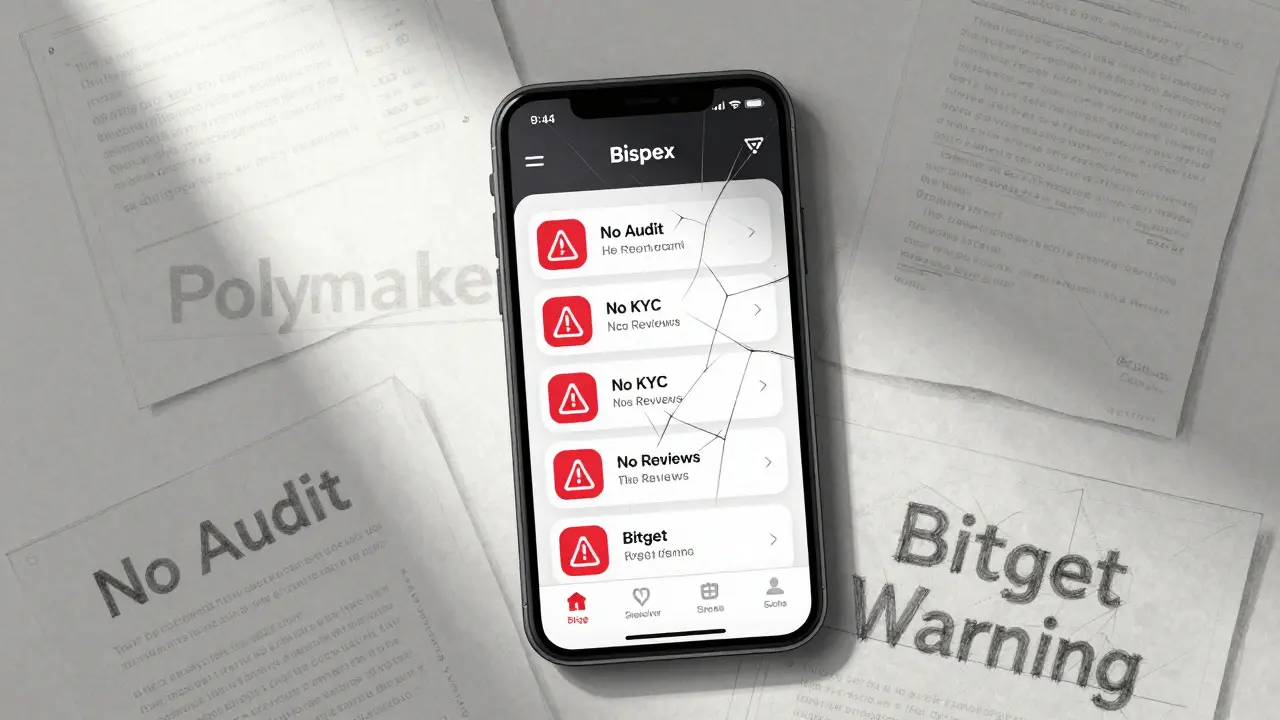
Security is the biggest red flag with Bispex. The platform claims to use “the highest level of security measures.” But where’s the proof? There are no published audits. No details about smart contract code. No information on how funds are stored.
Compare that to Coinbase, which keeps 98% of user funds in cold storage, uses multi-signature wallets, and is ISO 27001 certified. Or Binance, which has undergone dozens of third-party security audits and maintains a $1 billion SAFU fund to cover losses.
Bispex? Nothing. Just claims.
According to Immunefi’s 2022 DeFi Security Report, 60% of DeFi projects without public audits suffer critical vulnerabilities within their first year. Prediction markets are especially risky - they account for 12% of all DeFi exploits, with 63% of those caused by flawed smart contract logic, according to the EC-Council’s 2023 Blockchain Security Report.
And here’s the kicker: Bitget’s own listing for Bispex mentions potential smart contract vulnerabilities. That’s not a recommendation. That’s a warning.
No User Base, No Trust
Try searching for Bispex on Trustpilot, Reddit, or Bitcointalk. You won’t find a single meaningful review. No user stories. No complaints. No praise. Just silence.
That’s not normal. Even the smallest legitimate crypto platforms have at least a few hundred users talking about their experience. Polymarket, a real prediction market platform, has over 1,200 reviews on Trustpilot with a 4.2/5 rating. It has a Discord server with 45,000 members. People are actively using it, asking questions, sharing strategies.
Bispex? Crickets.
If no one’s using it, why would you? There’s no community to help you if something goes wrong. No tutorials. No customer support. No FAQ page. You’re on your own.
Regulatory Risks
Prediction markets are legally gray in many countries. The U.S. Commodity Futures Trading Commission (CFTC) has already sued Polymarket for operating without proper registration. If Bispex is targeting U.S. users - and there’s no indication it isn’t - it could be breaking federal law.
Major exchanges like Kraken and Coinbase spent years building KYC and AML systems to comply with regulations. Bispex? No mention of compliance anywhere. No proof of age verification. No identity checks. That’s not just risky - it’s dangerous.
If regulators come after Bispex, your funds could vanish overnight. And you’d have zero legal recourse.
Market Context: Tiny, Insignificant, and Growing Irrelevant
The entire prediction market sector is worth about $2.3 billion as of late 2023. Polymarket alone holds $1.1 billion of that. Augur, another established platform, holds $750 million.
Bispex? No one knows. No reports. No data. No rankings. It doesn’t show up on DeFi Llama, CoinGecko, or Messari. It’s invisible in the market.
Meanwhile, platforms that do have transparency, audits, and compliance are growing fast. Polymarket launched version 3.0 in August 2023 with improved security and regulatory features. Bispex hasn’t released any update since its initial launch - if it even had one.
Who Should Avoid Bispex?
Anyone who wants to:
- Own cryptocurrency
- Trade crypto with real market liquidity
- Have customer support when something goes wrong
- Use a platform with a proven security record
- Stay compliant with financial regulations
If you’re looking to make a quick bet on crypto prices and you’re okay with losing your money without recourse, then Bispex might be your thing. But if you’re serious about crypto, this isn’t the place.
What You Should Do Instead
If you want to trade crypto, use a real exchange: Binance, Coinbase, Kraken, or Bybit. They’re regulated, audited, and trusted by millions.
If you want to speculate on price movements, try Polymarket. It’s transparent. It’s audited. It has users. It has support. It’s been around since 2020 and survived market crashes, regulatory threats, and technical challenges.
If you’re drawn to prediction markets because you think you can beat the market - understand this: even the best traders lose more than they win. Prediction markets are designed so the house always takes a cut. And Bispex? The house is hiding.
Final Verdict
Bispex isn’t a crypto exchange. It’s a speculative betting platform with no transparency, no security proof, no users, and no regulatory standing. Its token is listed on Bitget, but that doesn’t make it safe or legitimate.
There’s no evidence it’s been audited. No proof it’s secure. No track record. No community. No support. And no reason to believe it will still exist six months from now.
If you’re considering putting money into Bispex, ask yourself this: Would you give your savings to a stranger who says they have the best security in the world - but won’t show you any proof?
Probably not.
Don’t make the same mistake with your crypto.
Is Bispex a real cryptocurrency exchange?
No, Bispex is not a cryptocurrency exchange. It’s a prediction market platform where users bet on the future price movements of cryptocurrencies. You don’t buy, sell, or store crypto on Bispex - you only place bets using its native BISP token.
Can I trade Bitcoin or Ethereum on Bispex?
No. You cannot trade Bitcoin, Ethereum, or any other cryptocurrency on Bispex. You can only predict whether their prices will rise or fall by a certain date. Your funds are locked in bets, not held as actual crypto assets.
Is Bispex safe to use?
Based on available information, Bispex is not considered safe. It has no public smart contract audits, no documented security measures, and no evidence of cold storage or multi-signature wallets. Bitget’s own listing warns of potential vulnerabilities in its code. Without audits or transparency, it’s a high-risk platform.
Why is there no user feedback about Bispex?
There’s almost no user feedback because very few people use it. Major review sites like Trustpilot, Reddit, and Bitcointalk have no meaningful discussions about Bispex. In contrast, platforms like Polymarket have thousands of reviews and active communities. The lack of users suggests low adoption, likely due to security concerns and poor visibility.
Is Bispex regulated?
There is no evidence that Bispex is regulated. It doesn’t appear to follow KYC or AML policies, which are standard for legal crypto platforms in the U.S., EU, and other major jurisdictions. The U.S. CFTC has already taken action against similar platforms, meaning Bispex could be operating illegally in many countries.
Should I buy the BISP token?
Buying BISP is speculative at best. Since Bispex has no proven track record, no security audits, and no user base, the token’s value is based entirely on hype - not utility. It’s listed on Bitget, but that doesn’t make it a good investment. Most experts advise against investing in tokens tied to unverified platforms.
What are better alternatives to Bispex?
For trading crypto, use Binance, Coinbase, or Kraken. For prediction markets, use Polymarket or Augur - both have public audits, active communities, regulatory compliance efforts, and years of operational history. These platforms offer real transparency, not empty claims.


