
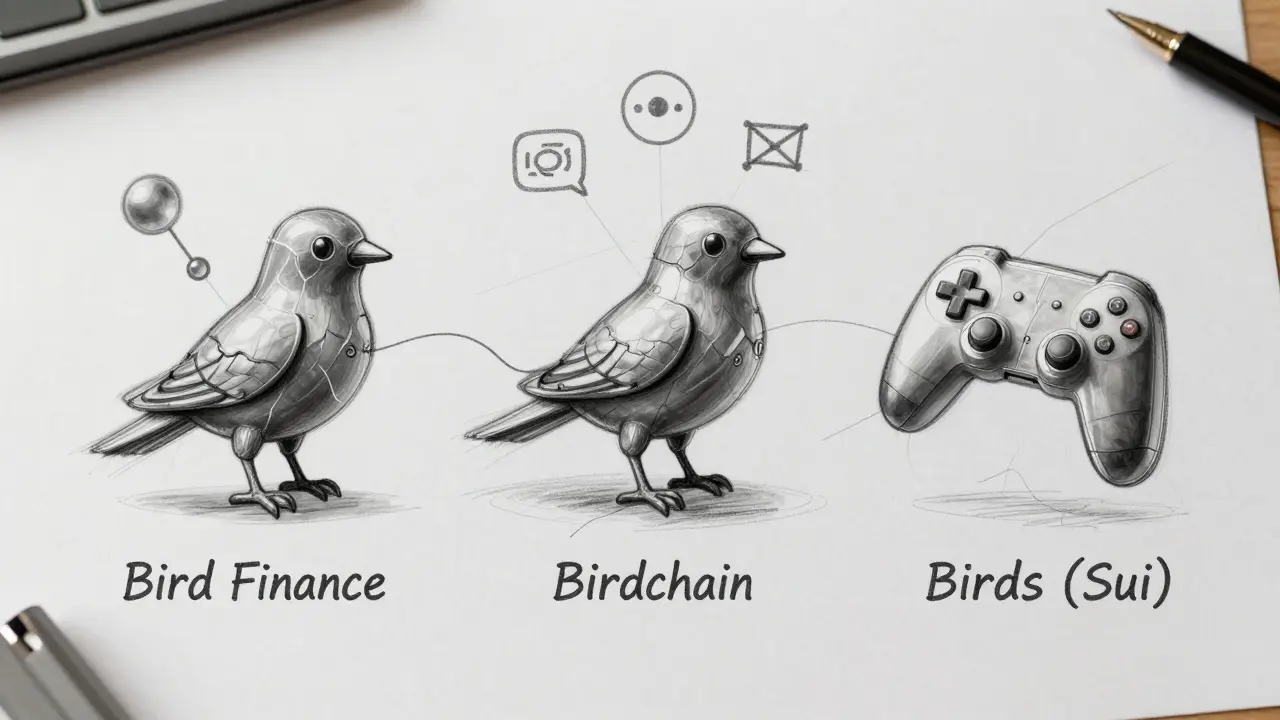
The BIRD airdrop from Bird Finance was never a simple giveaway. It was a messy, confusing, and partially unfulfilled event that left many crypto users wondering if they missed out - or worse, got scammed. If you’re reading this now in March 2026, you’re not alone. People are still asking: BIRD airdrop was real? Did anyone get tokens? Why does it feel like no one knows the answer?
What Was Bird Finance Supposed to Do?
Bird Finance wasn’t another meme coin with a cute logo and a Twitter campaign. It was built as a DeFi platform focused on automated yield farming. Its core idea was simple: take your crypto, throw it into smart pools, and let the system hunt down the best returns across Solana, Ethereum, HECO, and OKExChain. The BIRD token was the glue holding it all together - used for governance, rewards, and staking. But here’s the twist: 50% of all BIRD tokens were sent to a blackhole address the moment the project launched. That means half the supply vanished forever. Every time someone traded BIRD, a 6% fee kicked in. Two percent went to the liquidity pool, two percent to the DAO treasury, and two percent got distributed to everyone who already held BIRD. Sounds fair? Maybe. But it also meant the token was constantly shrinking in supply - and that’s a double-edged sword.The Airdrop Promise: Who Qualified?
Back in late 2024, Bird Finance announced an airdrop. Not a big one. Not a tiny one. Just enough to get people excited. To qualify, you had to do three things:- Hold a minimum amount of BIRD or other supported tokens in your wallet
- Connect your wallet to the official airdrop portal
- Follow their Twitter, join their Telegram, and retweet a few posts
The Name Confusion: Was It Even Bird Finance?
This is the part that ruined everything. There were three different projects using the name "BIRD" around the same time.- Bird Finance - the DeFi platform with smart pools and tokenomics.
- Birdchain - a decentralized messaging app that did its own 1,000,000 BIRD airdrop. Totally unrelated.
- Birds (Sui Mini App) - a mobile game on the Sui blockchain that rewarded players with BIRD tokens for reaching level 10.
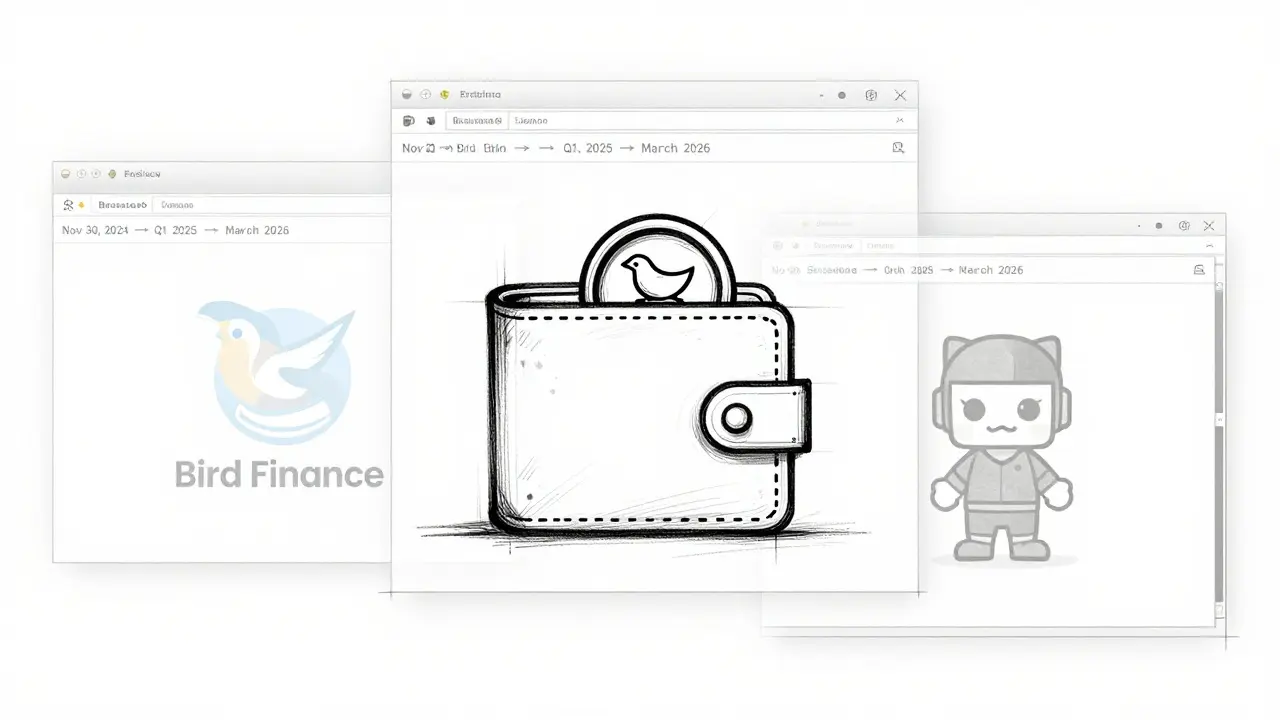
What Actually Happened to the Airdrop?
The original plan? Airdrop on November 30, 2024. Then it got pushed to Q1 2025. Now, in March 2026, no one has seen official proof that the distribution ever happened. There are no blockchain explorers showing large token transfers to hundreds of wallets. No public list of recipients. No transaction hashes on Etherscan or SolanaScan. The Bird Finance website went quiet. Their Twitter hasn’t posted since December 2024. Their Telegram group is mostly spam bots and people asking the same question over and over. Some claim they got paid. A few Reddit users posted screenshots of BIRD tokens appearing in their wallets in January 2025. But those screenshots? They’re impossible to verify. No timestamps. No wallet addresses. No proof the tokens came from Bird Finance and not a phishing scam. And here’s the kicker: the BIRD token itself never made it onto any major exchange. No listing on Binance. No listing on KuCoin. No listing on Uniswap. If you got tokens, where were you supposed to sell them? Who would buy them?The Real Reason the Airdrop Fizzled
There’s no official statement. But based on what we’ve seen, three things likely killed it:- Regulatory pressure - DeFi projects with token distribution and governance are increasingly under scrutiny. Bird Finance may have paused to avoid legal trouble.
- Technical delays - Cross-chain smart pools are hard. If their bridge or automation system had bugs, they couldn’t risk launching a token drop.
- Lost momentum - By Q1 2025, the crypto world had moved on. Pump.fun was blowing up. Phantom was getting attention. Bird Finance? No one was talking about it anymore.

What You Should Do Now
If you’re still holding BIRD tokens:- Check your wallet. Are they from Bird Finance? Or from Birdchain? Or the Sui game?
- Look at the contract address. If it doesn’t match the one on the archived Bird Finance website (via Wayback Machine), it’s not real.
- Don’t send any more funds to "claim" your airdrop. That’s a scam.
Why This Matters
The BIRD airdrop isn’t just a footnote. It’s a warning. It shows how easy it is for projects to vanish after making promises. It shows how easily users get confused by similar names. And it shows that even "smart" DeFi platforms can fail without transparency. The lesson? Never trust airdrop hype. Always verify the contract. Always check the timeline. Always ask: "Is this real - or just noise?"Did anyone actually receive BIRD tokens from the Bird Finance airdrop?
There’s no verifiable evidence that the Bird Finance airdrop was fully executed. A few users claim they received tokens in early 2025, but no public transaction records, wallet lists, or exchange listings confirm this. Without official proof from the project, it’s impossible to say who got paid - if anyone.
How can I tell if a BIRD token I received is real or a scam?
Check the contract address. The official Bird Finance BIRD token (if it existed) was supposed to be deployed on Ethereum and Solana. Look up the address on Etherscan or SolanaScan. If it doesn’t match the archived contract on Bird Finance’s website (via Wayback Machine), it’s likely fake. Also, if someone asks you to send crypto to "claim" your airdrop, that’s 100% a scam.
Why was there so much confusion between Bird Finance and other BIRD projects?
Three unrelated projects used the same token symbol: BIRD. Bird Finance (DeFi), Birdchain (messaging app), and Birds (Sui game) all ran separate airdrops. Because they used identical names and tokens, users mixed them up. Social media posts, Telegram groups, and even wallet alerts didn’t clarify which project was which - leading to mass confusion.
Was the BIRD token ever listed on any exchange?
No. There is no record of BIRD being listed on Binance, Coinbase, KuCoin, Uniswap, or any major exchange. Without liquidity or trading pairs, even if tokens were distributed, they had no real value or use. This is a red flag for any DeFi project claiming to be sustainable.
Should I still participate in future Bird Finance airdrops?
No. Bird Finance has been inactive since late 2024. Their website is offline, their social media is silent, and their community is abandoned. Any new airdrop claims under the name "Bird Finance" are either scams or rebranded copycats. Don’t connect your wallet. Don’t send funds. Don’t engage.


