
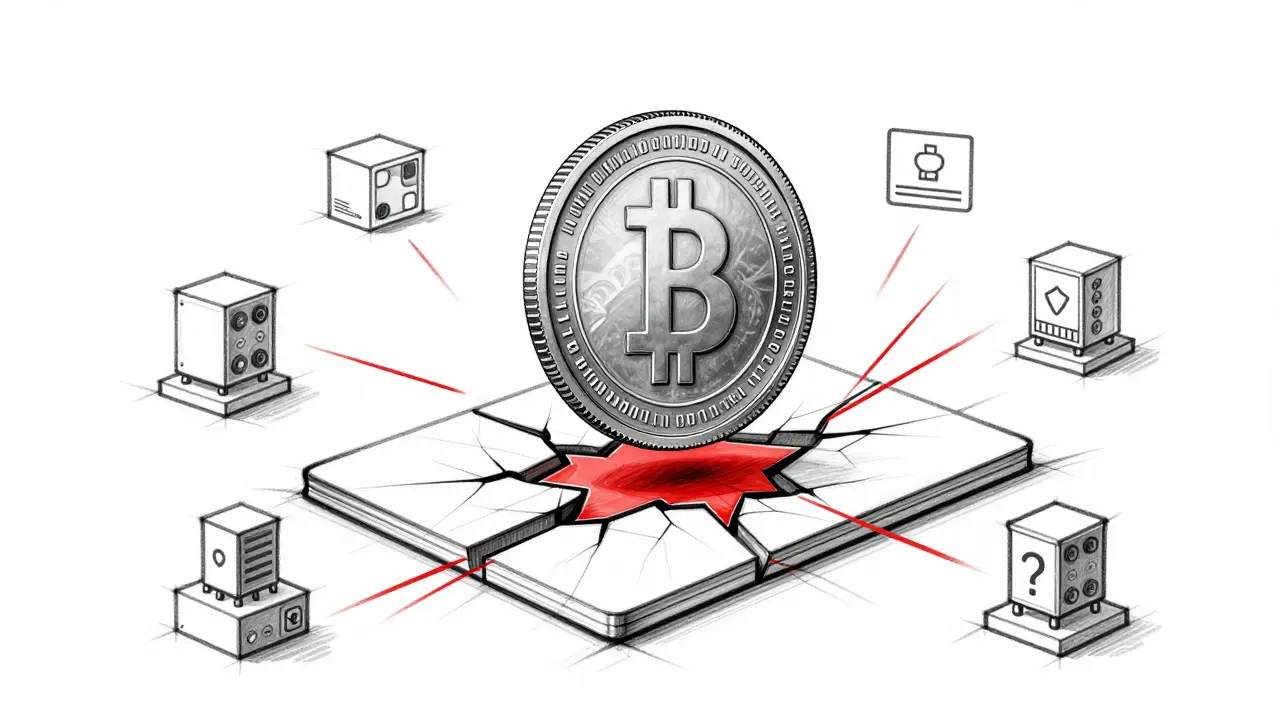
Imagine you could reverse any transaction on a blockchain - delete a payment, spend the same coins twice, or block others from using the network. Sounds like a hacker fantasy? It’s not. It’s a 51% attack, and it’s happened more than you think - mostly to small cryptocurrencies nobody talks about.
Most people think Bitcoin is unbreakable. And it is. But that’s not true for the hundreds of other coins out there. If your crypto has a market cap under $10 million, it’s likely sitting on a ticking bomb. All it takes is a few hundred thousand dollars and a few hours of rented mining power to turn your favorite altcoin into a playground for fraudsters.
What Exactly Is a 51% Attack?
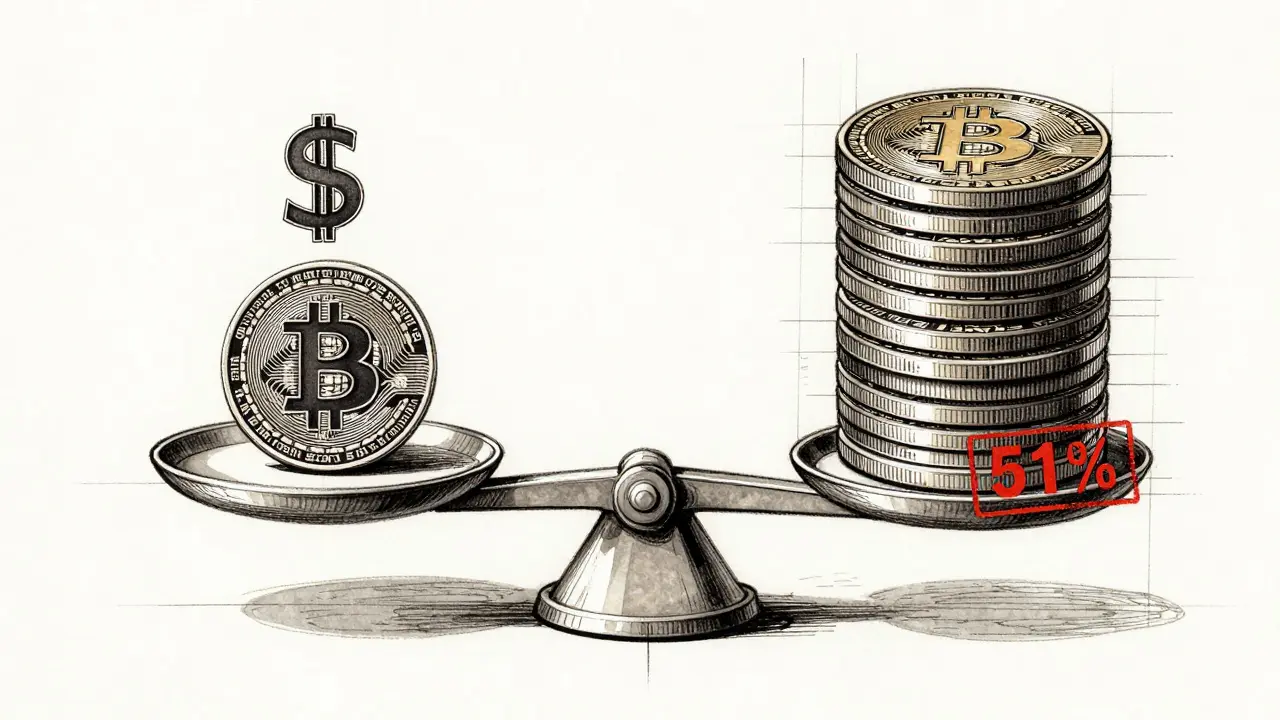
A 51% attack happens when one person or group controls more than half of a blockchain’s total mining power. That’s it. No magic, no secret code - just brute force. Once they have the majority, they can rewrite the blockchain’s history. They can undo transactions, prevent new ones from confirming, and double-spend coins.
Think of it like a voting system. In a normal blockchain, every miner votes on which transactions are valid by adding them to the longest chain. If you control more than half the votes, you control what gets accepted. You don’t need to hack wallets. You don’t need to steal private keys. You just need to out-mine everyone else.
And here’s the scary part: you can’t do this to Bitcoin. Not without spending billions and burning through enough electricity to power a small country. But for a coin with only 100 TH/s of total hash rate? You could rent the power for under $50,000 on a cloud mining site.
Why Small Cryptocurrencies Are Sitting Ducks
Small coins have three fatal flaws:
- Low hash rate - Fewer miners mean less total computing power. That makes it cheaper to overwhelm the network.
- Concentrated mining - Instead of thousands of small miners, a few big pools control most of the power. One of them could flip sides.
- No monitoring - Nobody’s watching. No alerts. No emergency response team. By the time anyone notices, the damage is done.
Compare that to Bitcoin, which has over 700 exahashes of mining power spread across tens of thousands of machines in over 100 countries. To attack Bitcoin, you’d need to buy or rent more than half of that - an impossible task. But for a coin like Bitcoin Gold? In 2018, attackers spent $18 million in double-spent coins. The attack cost them less than $1 million to pull off.
It’s not even about being “hacked.” It’s about economics. If you can steal $10 million and spend $200,000 to do it, you’re making a profit. That’s why these attacks aren’t random. They’re calculated.
Real Cases: When the Network Broke
Don’t take my word for it. Look at what’s already happened.
- Ethereum Classic (ETC) - Attacked five times between 2019 and 2020. One attack reversed 80,000 transactions. Exchanges paused withdrawals. Prices crashed 30% overnight.
- Bitcoin Gold (BTG) - Lost $18 million in 2018. The attackers used rented hash power from a cloud service. They didn’t even need specialized hardware.
- Monero (XMR) - In 2024, the Qubic mining pool briefly controlled over 50% of the network. Monero uses a CPU-friendly algorithm meant to prevent centralization. It didn’t matter. Money talked.
- Feathercoin and Krypton - Both got wiped out by 51% attacks in 2018. Krypton’s developers abandoned the project after the attack. Feathercoin never recovered.
These aren’t edge cases. They’re textbook examples of what happens when you build a blockchain without enough miners.

How Do Attackers Actually Do It?
There are three ways to get 51% of a network’s hash rate:
- Rent mining power - Services like NiceHash let you rent hash power by the hour. You pick the coin, pay in Bitcoin, and start mining. For a small coin, this can cost as little as $10,000 for a few hours.
- Buy cheap hardware - Many small coins use algorithms that run on regular GPUs or even CPUs. You can buy a few dozen used mining rigs for under $50,000.
- Collude with existing miners - If you’re a big mining pool operator, you could secretly team up with others to flip control. No one notices until it’s too late.
The most common method? Renting. Why buy equipment when you can rent it for less than the value of the coins you plan to steal? It’s like hiring a hitman instead of buying a gun.
And here’s the kicker: you don’t even need to keep control. You just need to be in control long enough to double-spend. You send coins to an exchange, wait for one confirmation, cash out to Bitcoin or Ethereum, then reverse the original transaction. The exchange thinks it got paid. It didn’t.
What Attackers Can’t Do
Let’s clear up a myth: a 51% attack doesn’t mean total control over the network. You can’t:
- Steal coins from wallets you don’t own
- Create new coins out of thin air
- Change the rules of the blockchain
- Access private keys or passwords
Your power is limited to rewriting the transaction history. That’s enough to wreck trust - but not enough to turn the whole system into your personal bank.
Think of it like this: you can’t break into a vault, but you can fake the security camera footage to make it look like no one robbed it. The vault’s still locked. But no one knows what really happened.
Why Exchanges Delist Coins After Attacks
When a coin gets attacked, exchanges don’t just panic. They act.
Why? Because they’re liable. If someone double-spends $500,000 on your platform and you let them cash out, you lose the money. So exchanges start requiring more confirmations. Then they freeze withdrawals. Then they delist the coin entirely.
Once a coin is delisted, its price collapses. Liquidity dries up. Developers leave. Users bail. The project dies.
It’s not about the money lost in the attack. It’s about the loss of trust. And trust, once broken, can’t be repaired with code.
Can You Protect a Small Cryptocurrency?
Yes - but it’s hard. And it goes against the whole idea of decentralization.
Some projects try:
- Checkpointing - Hardcoding trusted blocks into the software so attackers can’t rewrite the chain past a certain point. But this means someone has to decide which blocks are “trusted.” That’s centralization.
- Longer confirmations - Requiring 10 or 20 confirmations instead of 1. Slows down transactions, but makes attacks harder.
- Proof-of-Stake - Switching from mining to staking. But if you’re already small, nobody’s going to stake your coin.
- Community monitoring - A group of volunteers watches for unusual hash rate spikes. Good idea - but who pays them? Who trains them? Who keeps it going after six months?
There’s no perfect fix. The only real protection is having so much hash power that it’s too expensive to attack. And that only happens if your coin is popular, valuable, and widely used.
What Should You Do?
If you’re a user:
- Avoid holding small coins on exchanges. Use your own wallet.
- Wait for at least 6 confirmations before accepting any payment in a low-hash-rate coin.
- Don’t assume a coin is safe just because it’s on a major exchange. Many coins were listed before they got attacked.
If you’re a developer or investor:
- Check the coin’s hash rate on sites like Crypto51.app. If it’s below 100 TH/s, treat it as high-risk.
- Look at the mining pool distribution. If one pool controls more than 30%, it’s a red flag.
- Ask: “Can this coin survive a $500,000 attack?” If the answer is no, it’s not a currency. It’s a gamble.
There’s a reason Bitcoin is still the only crypto that feels “safe.” Not because it’s perfect. But because it’s too expensive to break.
The Future Is Bleak for Small Coins
Attack-as-a-service is now a thing. Underground markets offer 51% attacks as a subscription. Pay $10,000 a month, and they’ll target one coin per week. No technical skill needed.
Cloud mining is getting cheaper. Mining hardware is easier to buy. And more small coins are being launched every day.
The result? More attacks. More delistings. More dead projects.
Only the coins with massive hash power, strong communities, and real adoption will survive. The rest? They’ll become cautionary tales - another entry in the graveyard of crypto experiments that thought they could outsmart the math.


